CAS 17965-80-9
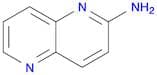
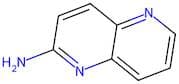
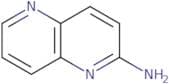
:1,5-Naphthyridin-2-amine
Description:
1,5-Naphthyridin-2-amine is a heterocyclic organic compound characterized by a fused bicyclic structure containing a nitrogen atom in the naphthyridine ring system. It features an amino group (-NH2) at the 2-position of the 1,5-naphthyridine framework, which contributes to its reactivity and potential biological activity. This compound is typically a solid at room temperature and may exhibit properties such as solubility in polar solvents, depending on its specific structure and substituents. 1,5-Naphthyridin-2-amine is of interest in medicinal chemistry due to its potential applications in pharmaceuticals, particularly as a scaffold for drug development targeting various biological pathways. Its nitrogen-containing heterocyclic structure can influence its interaction with biological targets, making it a subject of study in the development of new therapeutic agents. Additionally, the compound may exhibit fluorescence properties, which can be useful in analytical applications. As with many organic compounds, safety and handling precautions should be observed due to potential toxicity or reactivity.
Formula:C8H7N3
InChI:InChI=1S/C8H7N3/c9-8-4-3-6-7(11-8)2-1-5-10-6/h1-5H,(H2,9,11)
InChI key:InChIKey=WVXADFXJVONWJY-UHFFFAOYSA-N
SMILES:NC1=NC2=C(C=C1)N=CC=C2
Synonyms:- 1,5-Naphthyridin-2-amine
- 1,5-Naphthyridine, 2-amino-
- 2-Amino-1,5-naphthyridine
- 1,5-Naphthyridin-2-Ylamine
- [1,5]naphthyridin-2-ylamine
Sort by
Purity (%)
0
100
|
0
|
50
|
90
|
95
|
100
Found 4 products.
1,5-Naphthyridin-2-ylamine
CAS:1,5-Naphthyridin-2-ylamine is a monocyclic heterocycle that is derived from the amination of 1,5-naphthyridine. It has been used in the preparation of amides and carbocycles. The reaction also produces nitro compounds. The naphthyridinone reacts with a variety of alkyl groups to produce either alkenyl or alkynyl groups. This reaction can be carried out on an industrial scale by using Grignard reagents. The reaction proceeds via a tautomerization mechanism to produce the desired products. It has been shown that this chemical is toxic to cells and can produce DNA damage.
Formula:C8H7N3Purity:Min. 95%Molecular weight:145.16 g/molRef: 3D-SAA96580
Discontinued product