CymitQuimica logo

CAS 18132-63-3

:

Di-n-butyldimethoxysilane

Description:
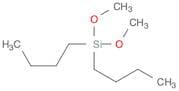
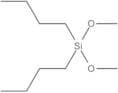
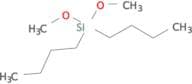
Di-n-butyldimethoxysilane, with the CAS number 18132-63-3, is an organosilicon compound characterized by its silane structure, which includes two n-butyl groups and two methoxy groups attached to a silicon atom. This compound is typically a colorless to pale yellow liquid with a relatively low viscosity. It is known for its ability to act as a coupling agent and surface modifier, enhancing adhesion between organic materials and inorganic substrates. Di-n-butyldimethoxysilane exhibits good thermal stability and is soluble in organic solvents, making it useful in various applications, including coatings, sealants, and adhesives. Additionally, it can participate in hydrolysis reactions, leading to the formation of silanol groups, which can further polymerize to form siloxane networks. Safety considerations include handling it in well-ventilated areas and using appropriate personal protective equipment, as it may cause irritation upon contact with skin or eyes. Overall, its unique chemical properties make it valuable in industrial and research applications.
Formula:C10H24O2Si
InChI:InChI=1/C10H24O2Si/c1-5-7-9-13(11-3,12-4)10-8-6-2/h5-10H2,1-4H3
SMILES:CCCC[Si](CCCC)(OC)OC
Synonyms:
  • Dibutyl(Dimethoxy)Silane
Sort by

Purity (%)
0
100
|
0
|
50
|
90
|
95
|
100
Found 4 products.
  • Silane, dibutyldimethoxy-

    CAS:
    Formula:C10H24O2Si
    Purity:98%
    Color and Shape:Liquid
    Molecular weight:204.3819

    Ref: IN-DA0022U5

    1g
    53.00€
    5g
    112.00€
    10g
    163.00€
    25g
    276.00€
    250mg
    25.00€
  • Dibutyldimethoxysilane

    CAS:
    Dibutyldimethoxysilane
    Purity:98%
    Molecular weight:204.38g/mol

    Ref: 54-OR1012835

    1g
    79.00€
    5g
    159.00€
    10g
    To inquire
    25g
    504.00€
    250mg
    To inquire
  • DI-n-BUTYLDIMETHOXYSILANE

    CAS:
    <p>Alkyl Silane - Conventional Surface Bonding<br>Aliphatic, fluorinated aliphatic or substituted aromatic hydrocarbon substituents are the hydrophobic entities which enable silanes to induce surface hydrophobicity. The organic substitution of the silane must be non-polar. The hydrophobic effect of the organic substitution can be related to the free energy of transfer of hydrocarbon molecules from an aqueous phase to a homogeneous hydrocarbon phase. A successful hydrophobic coating must eliminate or mitigate hydrogen bonding and shield polar surfaces from interaction with water by creating a non-polar interphase. Although silane and silicone derived coatings are in general the most hydrophobic, they maintain a high degree of permeability to water vapor. This allows coatings to breathe and reduce deterioration at the coating interface associated with entrapped water. Since ions are not transported through non-polar silane and silicone coatings, they offer protection to composite structures ranging from pigmented coatings to rebar reinforced concrete. A selection guide for hydrophobic silanes can be found on pages 22-31 of the Hydrophobicity, Hydrophilicity and Silane Surface Modification brochure.<br>Di-n-butyldimethoxysilane; Dimethoxydi-n-butylsilane<br>Dialkoxy silane<br></p>
    Formula:C10H24O2Si
    Purity:97%
    Color and Shape:Straw Liquid
    Molecular weight:204.39

    Ref: 3H-SID3214.0

    2kg
    To inquire
  • Di-n-butyldimethoxysilane

    CAS:
    Formula:C10H24O2Si
    Purity:98%
    Molecular weight:204.385

    Ref: 10-S05840

    100g
    1,436.00€