CAS 182499-90-7
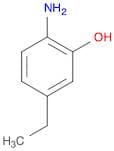
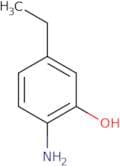
:2-Amino-5-ethylphenol
Description:
2-Amino-5-ethylphenol, with the CAS number 182499-90-7, is an organic compound characterized by the presence of an amino group (-NH2) and an ethyl group attached to a phenolic ring. This compound typically appears as a solid at room temperature and is soluble in organic solvents, reflecting its aromatic nature. The amino group contributes to its basicity, allowing it to participate in various chemical reactions, including nucleophilic substitutions and coupling reactions. The ethyl substituent influences its physical properties, such as melting and boiling points, and can affect its reactivity and interaction with other molecules. 2-Amino-5-ethylphenol may be used in the synthesis of dyes, pharmaceuticals, and other organic compounds, owing to its functional groups that can undergo further chemical transformations. Safety data should be consulted for handling and storage, as with any chemical substance, to ensure proper precautions are taken due to potential toxicity or reactivity.
Formula:C8H11NO
InChI:InChI=1S/C8H11NO/c1-2-6-3-4-7(9)8(10)5-6/h3-5,10H,2,9H2,1H3
InChI key:InChIKey=VBCFPAKCBOGUBW-UHFFFAOYSA-N
SMILES:C(C)C1=CC(O)=C(N)C=C1
Synonyms:- Phenol, 2-amino-5-ethyl-
- 2-Amino-5-ethylphenol
Sort by
Purity (%)
0
100
|
0
|
50
|
90
|
95
|
100
Found 3 products.
2-Amino-5-ethyl-phenol
CAS:2-Amino-5-ethylphenol is a phenolic compound that functions as an intermediate in the synthesis of other aminophenols. It is synthesized by reacting 2-aminoethanol with hydrochloric acid and sodium nitrite. 2-Amino-5-ethylphenol has been shown to be a proton donor, which means it can react with water to form hydrogen ions. It also has been found to interact with amines, which are organic compounds containing nitrogen. This interaction was found to depend on the concentration of the amine, pH, and temperature. The thermodynamic parameters for this reaction were determined using modelling and michaelis–menten kinetics.
Formula:C8H11NOPurity:Min. 95%Color and Shape:PowderMolecular weight:137.18 g/mol