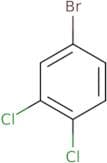
CAS 18282-59-2
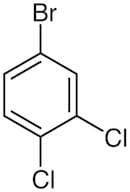
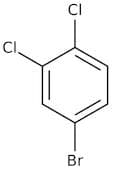
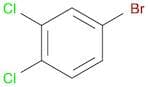
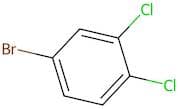
:4-Bromo-1,2-dichlorobenzene
Description:
4-Bromo-1,2-dichlorobenzene, with the CAS number 18282-59-2, is an aromatic halogenated compound characterized by the presence of bromine and chlorine substituents on a benzene ring. Specifically, it features a bromine atom at the para position and two chlorine atoms at the ortho positions relative to each other. This compound is typically a colorless to pale yellow liquid with a distinctive odor. It is moderately soluble in organic solvents but has low solubility in water. 4-Bromo-1,2-dichlorobenzene is primarily used in organic synthesis and as an intermediate in the production of various chemicals, including agrochemicals and pharmaceuticals. Its halogenated nature imparts certain chemical reactivity, making it useful in electrophilic substitution reactions. However, due to the presence of halogens, it may also exhibit environmental persistence and potential toxicity, necessitating careful handling and disposal. Safety measures should be observed when working with this compound, as it may pose health risks through inhalation or skin contact.
Formula:C6H3BrCl2
InChI:InChI=1S/C6H3BrCl2/c7-4-1-2-5(8)6(9)3-4/h1-3H
InChI key:InChIKey=CFPZDVAZISWERM-UHFFFAOYSA-N
SMILES:ClC1=C(Cl)C=CC(Br)=C1
Synonyms:- 1,2-Dichloro-4-bromobenzene
- 1-Bromo-3,4-chlorobenzene
- 1-Bromo-3,4-dichlorobenzene
- 3,4-Dichloro-1-bromobenzene
- 3,4-Dichlorophenyl bromide
- 4-Bromo-1,2-Dichlorobenzene
- Benzene, 4-bromo-1,2-dichloro-
- 3,4-Dichlorobromobenzene
Sort by
Purity (%)
0
100
|
0
|
50
|
90
|
95
|
100
Found 9 products.
1-Bromo-3,4-dichlorobenzene
CAS:Formula:C6H3BrCl2Purity:>98.0%(GC)Color and Shape:White or Colorless to Light orange to Yellow powder to lump to clear liquidMolecular weight:225.894-Bromo-1,2-dichlorobenzene, 98+%
CAS:This Thermo Scientific Chemicals brand product was originally part of the Alfa Aesar product portfolio. Some documentation and label information may refer to the legacy brand. The original Alfa Aesar product / item code or SKU reference has not changed as a part of the brand transition to Thermo SciFormula:C6H3BrCl2Purity:98+%Color and Shape:Clear liquid or fused solid, Colorless or white to pale yellow, Colorless or white to pale yellowMolecular weight:225.89Benzene, 4-bromo-1,2-dichloro-
CAS:Formula:C6H3BrCl2Purity:97%Color and Shape:LiquidMolecular weight:225.89803,4-Dichlorobromobenzene
CAS:3,4-DichlorobromobenzeneFormula:C6H3BrCl2Purity:98%Color and Shape: light yellow low melting solidMolecular weight:225.89802g/mol1-Bromo-3,4-dichlorobenzene
CAS:Formula:C6H3BrCl2Purity:98%Color and Shape:Low Melting SolidMolecular weight:225.891-Bromo-3,4-dichlorobenzene
CAS:Controlled ProductApplications 1-Bromo-3,4-dichlorobenzene
Formula:C6H3BrCl2Color and Shape:NeatMolecular weight:225.91-Bromo-3,4-dichlorobenzene-D2
CAS:Controlled ProductFormula:C6D2HBrCl2Color and Shape:NeatMolecular weight:227.911-Bromo-3,4-dichlorobenzene
CAS:1-Bromo-3,4-dichlorobenzene is an isomer of 1,2-Dichlorobenzene. It can be used as a Grignard reagent and as a solvent in the preparation of other organic compounds. 1,3-Dichlorobenzene is also used as a chromatographic stationary phase for separating chlorinated hydrocarbons. When heated to decomposition it emits toxic fumes of hydrogen chloride gas and bromine vapor. The reaction vessel should be well ventilated during its use. 1,2-Dichlorbenzene reacts with nitrite ion to form chloride and nitrous oxide gas; it also reacts with hydrochloric acid to form chloride and water. These reactions are reversible. 1,2-Dichlorobenzene does not react with sodium hydroxide because the intermediate -OH group is not sufficiently acidic for protonation to take place completely. This compound is an organic solventFormula:C6H3BrCl2Purity:95%NmrMolecular weight:225.9 g/mol