


CAS 18333-80-7
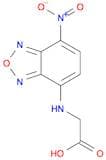
:Glycine, N-(7-nitro-2,1,3-benzoxadiazol-4-yl)-
Description:
Glycine, N-(7-nitro-2,1,3-benzoxadiazol-4-yl)-, commonly referred to as a fluorescent probe, is a chemical compound characterized by its unique structure that combines an amino acid (glycine) with a nitrobenzoxadiazole moiety. This compound is often utilized in biochemical and biophysical research due to its fluorescent properties, which allow for the visualization of biological processes. The presence of the nitro group enhances its photophysical characteristics, making it suitable for applications in fluorescence microscopy and imaging. Glycine serves as a building block in various biochemical pathways, and its conjugation with the benzoxadiazole enhances its solubility and stability in aqueous environments. The compound is typically synthesized through specific chemical reactions that involve the modification of glycine and the introduction of the benzoxadiazole group. Its applications extend to studying protein interactions, cellular dynamics, and other molecular biology techniques, making it a valuable tool in scientific research. Safety and handling precautions should be observed due to the potential toxicity associated with nitro compounds.
Formula:C8H6N4O5
Sort by
Purity (%)
0
100
|
0
|
50
|
90
|
95
|
100
Found 2 products.
2-[(7-Nitro-2,1,3-benzoxadiazol-4-yl)amino]acetic acid
CAS:Versatile small molecule scaffoldFormula:C8H6N4O5Purity:Min. 95%Molecular weight:238.16 g/mol

![2-[(7-Nitro-2,1,3-benzoxadiazol-4-yl)amino]acetic acid](/_next/image/?url=https%3A%2Fstatic.cymitquimica.com%2Fproducts%2F3D%2Fthumb%2FTAA33380.jpg&w=3840&q=75)
