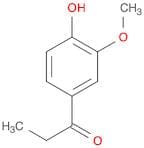
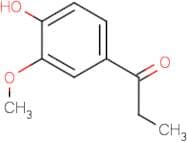
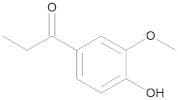
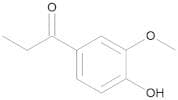
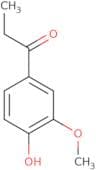
CAS 1835-14-9
:Propiovanillone
- 1-(3-Methoxy-4-hydroxyphenyl)-1-propanone
- 1-(4-Hydroxy-3-Methoxyphenyl)Propan-1-One
- 1-(4-Hydroxy-3-methoxyphenyl)-1-propanone
- 1-(4-Hydroxy-3-methoxyphenyl)propanone
- 1-Hydroxy-2-methoxy-4-propionylbenzene
- 1-Propanone, 1-(4-hydroxy-3-methoxyphenyl)-
- 1-Propiovanillone
- 4'-Hydroxy-3'-methoxypropiophenone
- Ethyl guaiacyl ketone
- Guaiacyl-1-propanone
- NSC 16691
- Propioguaiacol
- Propioguaiacone
- Propiophenone, 4′-hydroxy-3′-methoxy-
- Propiovanillone
- α-Guaiacyl ethyl ketone
- α-Guaiacylpropanone
- 4-Hydroxy-3-methoxyphenylacetone
- 1-(4-Hydroxy-3-methoxyphenyl)-1-propanone (propiovanillone)
- 3-METHOXY-4-HYDROXYPROPIOPHENONE
- See more synonyms
1-Propanone, 1-(4-hydroxy-3-methoxyphenyl)-
CAS:Formula:C10H12O3Purity:98%Color and Shape:SolidMolecular weight:180.20054-Hydroxy-3-methoxypropiophenone
CAS:4-Hydroxy-3-methoxypropiophenoneFormula:C10H12O3Purity:98%Color and Shape: off-white solidMolecular weight:180.20g/mol1-(4-Hydroxy-3-methoxyphenyl)propan-1-one
CAS:Controlled ProductFormula:C10H12O3Color and Shape:NeatMolecular weight:180.201-(4-Hydroxy-3-methoxyphenyl)-1-propanone
CAS:Applications 1-(4-Hydroxy-3-methoxyphenyl)-1-propanone is a derivative of Guaiacol, a precursor to various flavorants, such as eugenol and vanillin.
References Allen, C., et al.: Org. Synth., 3, 418 (1955); Esposito, L., et al.: Kirk-Othmer Encyclopedia of Chemical Technology, 4th edition, 24, 812 (1997)Formula:C10H12O3Color and Shape:NeatMolecular weight:180.24-Hydroxy-3-methoxypropiophenone
CAS:4-Hydroxy-3-methoxypropiophenone is a contaminating compound that has been found in water vapor and may be generated by the thermal degradation of fatty acids. This chemical is also present in wood and lignin. The ether linkages in this chemical make it resistant to hydrolysis, making it difficult to remove from water or other substances. 4-Hydroxy-3-methoxypropiophenone is produced by the chronic bronchitis and filamentous fungus, but carbon sources are required for its production. It can be used as a starting material for the synthesis of other organic compounds with hydroxyl groups, such as phenols and coumarins.
Formula:C10H12O3Purity:Min. 95%Color and Shape:PowderMolecular weight:180.2 g/mol1-(4-Hydroxy-3-methoxyphenyl)propan-1-one
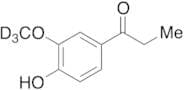
CAS:Formula:C10H12O3Purity:98%Color and Shape:SolidMolecular weight:180.2031-(4-Hydroxy-3-methoxyphenyl)-1-propanone-d3
CAS:Controlled ProductApplications 1-(4-Hydroxy-3-methoxyphenyl)-1-propanone-d3 is labelled 1-(4-Hydroxy-3-methoxyphenyl)-1-propanone (H947600) which is a derivative of Guaiacol, a precursor to various flavorants, such as eugenol and vanillin.
References Allen, C., et al.: Org. Synth., 3, 418 (1955); Esposito, L., et al.: Kirk-Othmer Encyclopedia of Chemical Technology, 4th edition, 24, 812 (1997)Formula:C10H9D3O3Color and Shape:NeatMolecular weight:183.22