CAS 18362-49-7
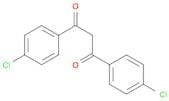
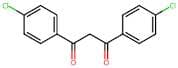
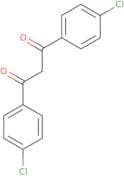
:1,3-bis(4-chlorophenyl)propane-1,3-dione
Description:
1,3-bis(4-chlorophenyl)propane-1,3-dione, with the CAS number 18362-49-7, is an organic compound characterized by its diketone structure, featuring two 4-chlorophenyl groups attached to a propane backbone. This compound typically appears as a solid at room temperature and is known for its potential applications in organic synthesis and medicinal chemistry. The presence of the chlorophenyl groups enhances its lipophilicity and may influence its biological activity. The diketone functional groups can participate in various chemical reactions, including condensation and oxidation, making it a versatile intermediate in synthetic pathways. Additionally, the compound may exhibit interesting electronic properties due to the electron-withdrawing nature of the chlorine substituents, which can affect its reactivity and interaction with biological targets. Safety data should be consulted for handling, as with many organic compounds, it may pose health risks if not managed properly. Overall, 1,3-bis(4-chlorophenyl)propane-1,3-dione is a notable compound in the realm of organic chemistry with diverse potential applications.
Formula:C15H10Cl2O2
InChI:InChI=1/C15H10Cl2O2/c16-12-5-1-10(2-6-12)14(18)9-15(19)11-3-7-13(17)8-4-11/h1-8H,9H2
SMILES:c1cc(ccc1C(=O)CC(=O)c1ccc(cc1)Cl)Cl
Synonyms:- 1,3-Bis(p-chlorophenyl)-1,3-propanedione
- 1,3-Di-(4-chlorophenyl)-1,3-propanedione
- 1,3-Propanedione, 1,3-Bis(4-Chlorophenyl)-
Sort by
Purity (%)
0
100
|
0
|
50
|
90
|
95
|
100
Found 4 products.
1,3-Propanedione, 1,3-bis(4-chlorophenyl)-
CAS:Formula:C15H10Cl2O2Purity:98%Color and Shape:SolidMolecular weight:293.14471,3-Bis(4-chlorophenyl)propane-1,3-dione
CAS:1,3-Bis(4-chlorophenyl)propane-1,3-dionePurity:98%Molecular weight:293.15g/mol1,3-Bis(4-chlorophenyl)propane-1,3-dione
CAS:1,3-Bis(4-chlorophenyl)propane-1,3-dione (BPPD) is a luminescent inhibitor that is used in biosciences to study the reticulum and the intestinal tract. BPPD has been shown to inhibit DSS-induced colitis in mice by reducing disease activity index. BPPD also has an effect on telecommunication systems and can be used as a crystal x-ray diffraction agent. In coordination chemistry, it is known for its ability to bind metals such as copper and zinc. BPPD also has an inhibitory effect on endoplasmic reticulum enzymes, which may lead to the development of new drugs for the treatment of diseases such as colitis.Formula:C15H10Cl2O2Purity:Min. 95%Molecular weight:293.14 g/mol