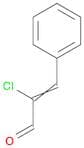
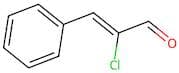
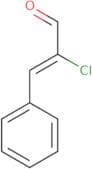
CAS 18365-42-9
:α-Chlorocinnamaldehyde
Description:
α-Chlorocinnamaldehyde is an organic compound characterized by its aromatic structure, featuring a chlorinated phenyl group and an aldehyde functional group. It is typically a yellow to brown liquid with a distinctive odor, often described as sweet and floral. The compound is known for its reactivity, particularly due to the presence of the aldehyde group, which can participate in various chemical reactions, including nucleophilic additions and condensation reactions. α-Chlorocinnamaldehyde is soluble in organic solvents such as ethanol and ether but has limited solubility in water. It is used in organic synthesis and as an intermediate in the production of various pharmaceuticals and agrochemicals. Additionally, it exhibits antimicrobial and antifungal properties, making it of interest in the development of preservatives and other applications. Safety precautions should be taken when handling this compound, as it may cause skin and eye irritation. Overall, α-Chlorocinnamaldehyde is a versatile compound with significant utility in both industrial and research settings.
Formula:C9H7ClO
InChI:InChI=1S/C9H7ClO/c10-9(7-11)6-8-4-2-1-3-5-8/h1-7H
InChI key:InChIKey=SARRRAKOHPKFBW-UHFFFAOYSA-N
SMILES:C(=C(C=O)Cl)C1=CC=CC=C1
Synonyms:- (2Z)-2-chloro-3-phenylprop-2-enal
- 2-Chloro-3-phenyl-2-propenal
- 2-Chloro-3-phenylacrolein
- 2-Chloro-3-phenylacrylaldehyde
- 2-Chloro-3-phenylpropenal
- 2-Chlorocinnamaldehyde
- 2-Propenal, 2-chloro-3-phenyl-
- 2-Propenal, 2-chloro-3-phenyl- (9CI)
- Brn 2205649
- Cinnamaldehyde, alpha-chloro-
- Cinnamaldehyde, α-chloro-
- α-Chlorocinnamaldehyde
- alpha-Chlorocinnamaldehyde
- See more synonyms
Sort by
Purity (%)
0
100
|
0
|
50
|
90
|
95
|
100
Found 3 products.
2-Propenal, 2-chloro-3-phenyl-
CAS:Formula:C9H7ClOPurity:90.0%Color and Shape:SolidMolecular weight:166.6043α-Chlorocinnamaldehyde
CAS:α-Chlorocinnamaldehyde is a nucleophilic compound that is used as a reagent in the determination of free phenols and carboxylic acids in foods. α-Chlorocinnamaldehyde reacts with the carboxyl group of aldehydes or ketones to form a Schiff base, which is then hydrolyzed by acid to produce a colored compound. The reaction is most efficient at pH 1-2 and near room temperature. This method can be used to detect β-unsaturated aldehydes in foods, such as trans-cinnamic acid (trans-ddp) and cis-cinnamic acid (cis-ddp). The reaction between α-chlorocinnamaldehyde and tyrosinase has been shown to inhibit the enzyme's activity. The uptake of α-chlorocinnamaldehyde into cells has also been determined using radioactive labeling techniques.Formula:C9H7ClOPurity:Min. 95%Color and Shape:Clear LiquidMolecular weight:166.6 g/mol