CAS 183745-81-5
:AMYLOID BETA-PROTEIN (1-15)
Description:
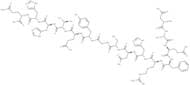
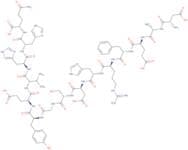
Amyloid beta-protein (1-15), with the CAS number 183745-81-5, is a peptide fragment derived from the amyloid precursor protein (APP). This peptide consists of the first 15 amino acids of the amyloid beta peptide, which is implicated in the pathogenesis of Alzheimer's disease. Characteristically, it is a hydrophilic molecule, exhibiting a tendency to aggregate and form oligomers, which are believed to be neurotoxic. The peptide plays a crucial role in the formation of amyloid plaques, a hallmark of Alzheimer's pathology. Its structure includes a sequence that is prone to adopting beta-sheet conformations, contributing to its aggregation properties. The study of this peptide is significant for understanding the molecular mechanisms underlying Alzheimer's disease and for developing potential therapeutic strategies. Additionally, it serves as a useful model for investigating the interactions of amyloid peptides with other biomolecules and cellular components. Overall, amyloid beta-protein (1-15) is a key focus in neurodegenerative research, particularly concerning its role in cognitive decline and neuroinflammation.
- H-Asp-Ala-Glu-Phe-Arg-His-Asp-Ser-Gly-Tyr-Glu-Val-His-His-Gln-Oh
Sort by
Purity (%)
0
100
|
0
|
50
|
90
|
95
|
100
Found 3 products.
β-Amyloid (1-15)
CAS:β-Amyloid (1-15) (Amyloid β-Protein (1-15)) is a fragment of β-amyloid protein used in the study of Alzheimer's disease.Formula:C78H107N25O27Purity:99.88%Color and Shape:SolidMolecular weight:1826.84β-Amyloid (1-15)
CAS:Custom research peptide; min purity 95%. For different specs please use the Peptide Quote Tool
Formula:C78H107N25O27Molecular weight:1,826.87 g/molAmyloid beta-Protein (1-15) trifluoroacetate salt
CAS:Amyloid beta-protein (1-15) is a peptide fragment of the amyloid protein that is associated with Alzheimer's disease. Amyloid beta-Protein (1-15) activates the transcription of a number of genes, including those that encode neurotrophic factors and growth factors. It has been shown to have neurotrophic properties and to increase the survival rate of neurons in vitro. It also protects against neuronal death induced by oxidative stress and high concentrations of glutamate. The structure of amyloid beta-protein (1-15) has been elucidated using molecular modeling techniques and X-ray crystallography. The trifluoroacetate salt form is stable at physiological pH levels and shows good solubility in water, making it an attractive therapeutic drug candidate.Formula:C78H107N25O27Purity:Min. 95%Molecular weight:1,826.84 g/mol