CAS 184161-19-1
:L-GLUTAMINE-13C5, 15N2, 99 ATOM % 13C, 9
Description:
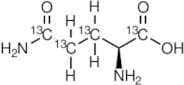
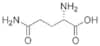
L-Glutamine-13C5, 15N2, 99 Atom % 13C, 9 is a stable isotope-labeled form of the amino acid L-glutamine, which is crucial for various metabolic processes in living organisms. This compound is characterized by the incorporation of five carbon-13 isotopes and two nitrogen-15 isotopes, enhancing its utility in metabolic studies and tracer experiments. The presence of these isotopes allows researchers to track the metabolic pathways and dynamics of glutamine in biological systems with high precision. L-glutamine itself is a non-essential amino acid that plays a vital role in protein synthesis, cellular metabolism, and as a nitrogen donor in various biosynthetic processes. The specific labeling with isotopes makes this compound particularly valuable in fields such as biochemistry, pharmacology, and nutrition research, where understanding the fate of amino acids in metabolic pathways is essential. Its high purity (99 atom % 13C) ensures that it can be used effectively in experiments without significant interference from other isotopes.
Formula:C5H10N2O3
Synonyms:- L-Glutamine-13C5,15N299Atom%13C99Atom%15N
Sort by
Purity (%)
0
100
|
0
|
50
|
90
|
95
|
100
Found 4 products.
L-Glutamine-13C5
CAS:Applications L-Glutamine-13C5 is the isotope labelled analog of L-Glutamine. L-Glutamine is an essential amino acid that is a crucial component of culture media that serves as a major energy source for cells in culture. L-Glutamine is very stable as a dry powder and as a frozen solution. In liquid media or stock solutions, however, L-glutamine degrades relatively rapidly. Optimal cell performance usually requires supplementation of the media with L-glutamine prior to use.
References Rivett, A., et al.: J. Biol. Chem., 260, 300 (1985), Watford, M., et al.: Metabolism, 49, 141 (2000), Wilmore, D., et al.: J. Nutr., 131, 2543S (2001),Formula:C5H10N2O3Color and Shape:NeatMolecular weight:151.11