CAS 18456-87-6
:5-Isopropyl-1,3-cyclohexanedione
Description:
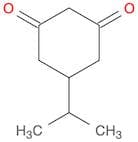
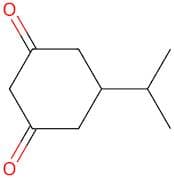
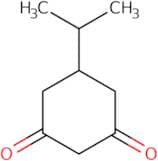
5-Isopropyl-1,3-cyclohexanedione, with the CAS number 18456-87-6, is an organic compound characterized by its cyclohexane ring structure substituted with two ketone functional groups at the 1 and 3 positions, and an isopropyl group at the 5 position. This compound typically appears as a colorless to pale yellow liquid or solid, depending on its state and purity. It is known for its potential applications in organic synthesis, particularly as a building block in the preparation of various pharmaceuticals and agrochemicals. The presence of the isopropyl group contributes to its hydrophobic characteristics, while the diketone functionality can participate in various chemical reactions, including condensation and oxidation. Additionally, 5-Isopropyl-1,3-cyclohexanedione may exhibit interesting biological activities, making it a subject of research in medicinal chemistry. As with many organic compounds, proper handling and safety measures should be observed due to potential reactivity and toxicity.
Formula:C9H16O3
InChI:InChI=1/C9H14O2.H2O/c1-6(2)7-3-8(10)5-9(11)4-7;/h6-7H,3-5H2,1-2H3;1H2
SMILES:CC(C)C1CC(=O)CC(=O)C1.O
Synonyms:- 5-(Propan-2-Yl)Cyclohexane-1,3-Dione
- 5-(1-Methylethyl)Cyclohexane-1,3-Dione Hydrate
Sort by
Purity (%)
0
100
|
0
|
50
|
90
|
95
|
100
Found 3 products.
5-Isopropylcyclohexane-1,3-dione
CAS:Formula:C9H14O2Purity:97%Color and Shape:SolidMolecular weight:154.20635-Isopropyl-1,3-cyclohexanedione
CAS:5-Isopropyl-1,3-cyclohexanedionePurity:98%Molecular weight:154.21g/mol5-Isopropyl-1,3-cyclohexanedione
CAS:5-Isopropyl-1,3-cyclohexanedione is an organic compound that has the functional groups of an α-pinene and β-unsaturated aldehydes. It is used as a solvent for organic reactions and as a starting material in organic synthesis. It is also used as a reagent in the preparation of cyclic compounds. This chemical is often used to synthesize 4-hydroxycoumarin derivatives. 5-Isopropyl-1,3-cyclohexanedione can be produced by reacting furyl alcohol with formaldehyde under acid conditions. The reaction will produce the desired product with an efficient method.Formula:C9H14O2Purity:Min. 95%Color and Shape:PowderMolecular weight:154.21 g/mol