CAS 185145-33-9
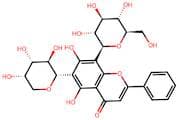
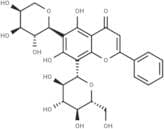
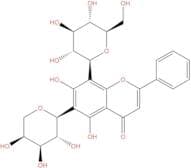
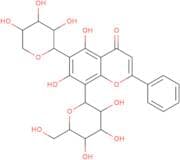
:Chrysin 6-C-arabinoside 8-C-glucoside
Description:
Chrysin 6-C-arabinoside 8-C-glucoside, with the CAS number 185145-33-9, is a flavonoid glycoside derived from chrysin, a naturally occurring flavonoid known for its potential health benefits. This compound features two sugar moieties: an arabinose and a glucose, which are attached to the chrysin backbone at specific positions. The presence of these glycosyl groups enhances the solubility and bioavailability of the flavonoid, potentially increasing its antioxidant and anti-inflammatory properties. Chrysin itself is recognized for its role in various biological activities, including its potential effects on hormone regulation and its ability to scavenge free radicals. The glycosylation of chrysin may also influence its pharmacokinetics and therapeutic applications. Research into chrysin and its derivatives suggests they may have applications in nutraceuticals and pharmaceuticals, particularly in the context of chronic diseases and oxidative stress. However, further studies are necessary to fully elucidate the biological activities and mechanisms of action of Chrysin 6-C-arabinoside 8-C-glucoside.
Formula:C26H28O13
Synonyms:- Chrysin 6-C-arabinoside 8-C-glucoside
- 4H-1-Benzopyran-4-one, 6-α-L-arabinopyranosyl-8-β-D-glucopyranosyl-5,7-dihydroxy-2-phenyl-
Sort by
Purity (%)
0
100
|
0
|
50
|
90
|
95
|
100
Found 4 products.
Chrysin 6-C-arabinoside 8-C-glucoside
CAS:Chrysin 6-C-arabinoside 8-C-glucosidePurity:≥98%Molecular weight:548.49g/molChrysin 6-C-arabinoside 8-C-glucoside
CAS:Chrysin 6-C-arabinoside 8-C-glucoside & its isomer inhibit α-glucosidase, used to treat type 2 diabetes.Formula:C26H28O13Purity:99.88%Color and Shape:SolidMolecular weight:548.49Chrysin 6-C-arabinoside 8-C-glucoside
CAS:Chrysin 6-C-arabinoside 8-C-glucoside is a flavonoid derivative, which is an intricate part of a class of naturally occurring plant compounds known for their diverse biological activities. It is predominantly sourced from various plants and is part of the larger family of flavonoids that are crucial for plant metabolism and protection. The compound's mode of action involves interacting with cellular pathways to exert potent antioxidant effects, effectively neutralizing free radicals and protecting cells from oxidative stress. This mechanism is vital for mitigating damage at the molecular level, which can contribute to numerous cellular dysfunctions and diseases.Formula:C26H28O13Purity:Min. 95%Molecular weight:548.5 g/mol