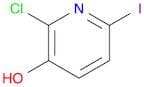
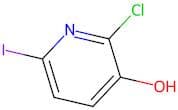
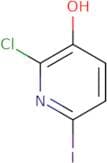
CAS 185220-68-2
:2-Chloro-3-hydroxy-6-iodopyridine
Description:
2-Chloro-3-hydroxy-6-iodopyridine is a heterocyclic organic compound characterized by its pyridine ring, which is a six-membered aromatic ring containing one nitrogen atom. The presence of chlorine and iodine substituents, along with a hydroxyl group, contributes to its unique chemical properties. This compound typically exhibits moderate solubility in polar solvents due to the hydroxyl group, which can engage in hydrogen bonding. The chlorine and iodine atoms introduce significant electronegativity differences, influencing the compound's reactivity and potential applications in organic synthesis or medicinal chemistry. The presence of these halogens can also affect the compound's stability and interaction with biological systems. As a pyridine derivative, it may exhibit biological activity, making it of interest in pharmaceutical research. The compound's CAS number, 185220-68-2, allows for easy identification in chemical databases and literature. Overall, 2-Chloro-3-hydroxy-6-iodopyridine is a valuable compound for further exploration in various chemical and biological contexts.
Formula:C5H3ClINO
Synonyms:- 2-Chloro-6-Iodopyridin-3-Ol
Sort by
Purity (%)
0
100
|
0
|
50
|
90
|
95
|
100
Found 4 products.
2-Chloro-6-iodopyridin-3-ol
CAS:Formula:C5H3ClINOPurity:95%Color and Shape:SolidMolecular weight:255.4409Ref: IN-DA007RJW
1g25.00€5g32.00€10g56.00€1kgTo inquire25g91.00€100g197.00€500gTo inquire100mg21.00€250mg21.00€2-Chloro-6-iodo-pyridin-3-ol
CAS:Formula:C5H3ClINOPurity:95%Color and Shape:SolidMolecular weight:255.442-Chloro-3-hydroxy-6-iodopyridine
CAS:2-Chloro-3-hydroxy-6-iodopyridine is an electrophile that reacts with magnesium to form a reactive intermediate. This intermediate can react with halides to form diaryl compounds and reactive intermediates, which can be used as reagents for organic synthesis. 2-Chloro-3-hydroxy-6-iodopyridine is also a low temperature reactive intermediate and it has been shown to react with sulfonates to form cycloadducts. This compound can be eliminated by reductive amination or hydrolysis, leading to yields of the desired product.Formula:C5H3ClINOPurity:Min. 95%Molecular weight:255.44 g/mol