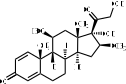
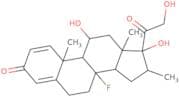
CAS 185613-69-8
:Betamethasone EP Impurity I
Description:
Betamethasone EP Impurity I, with the CAS number 185613-69-8, is a chemical compound that serves as an impurity associated with the corticosteroid betamethasone. This substance is characterized by its structural similarity to betamethasone, which is known for its anti-inflammatory and immunosuppressive properties. As an impurity, it may arise during the synthesis or degradation of betamethasone and can be of interest in pharmaceutical quality control and regulatory assessments. The compound typically exhibits a specific set of physical and chemical properties, including solubility in organic solvents and stability under certain conditions. Its identification and quantification are crucial for ensuring the purity of betamethasone formulations, as impurities can affect the efficacy and safety of the final product. Analytical techniques such as high-performance liquid chromatography (HPLC) are commonly employed to detect and measure this impurity in pharmaceutical preparations. Understanding the characteristics of Betamethasone EP Impurity I is essential for maintaining the quality standards of corticosteroid medications.
Formula:C28H37FO7
Synonyms:- Pregna-1,4-diene-3,20-dione, 8-fluoro-11,17,21-trihydroxy-16-methyl-, (8α,9β,11β,16β)- (9CI)
- Betamethasone Impurity 9(Betamethasone EP Impurity I)
- DISCONTINUED
- Betamethasone EP Impurity I
- (8S,9R,10R,11S,13S,14R,16S,17R)-8-fluoro-11,17-dihydroxy-17-(2-hydroxyacetyl)-10,13,16-trimethyl-6,7,9,11,12,14,15,16-octahydrocyclopenta[a]phenanthren-3-one
- 9-Desfluoro-8-fluoro Betamethasone
Sort by
Purity (%)
0
100
|
0
|
50
|
90
|
95
|
100
Found 3 products.
Betamethasone EP Impurity I
CAS:Controlled ProductBetamethasone EP Impurity I is a synthesized impurity of betamethasone. It is an impurity in the drug product that is used for the treatment of inflammation and allergies, as well as some skin conditions. The main physicochemical properties are: white powder, soluble in methanol, insoluble in water and acetone. This impurity can be obtained by synthetic methods or it can be formed by metabolic degradation of the parent drug. The impurity has been shown to have a niche application in HPLC standards for analytical purposes and research and development of new drugs.Formula:C22H29FO5Purity:Min. 95%Molecular weight:392.5 g/mol