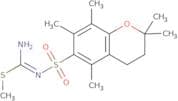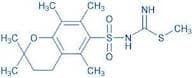
CAS 185674-98-0
:PMC-S-METHYLISOTHIOUREA
Description:
PMC-S-Methylisothiourea, identified by its CAS number 185674-98-0, is a chemical compound that functions primarily as a potent inhibitor of nitric oxide synthase. This compound is characterized by its ability to selectively inhibit the production of nitric oxide, which plays a crucial role in various physiological processes, including vasodilation and neurotransmission. PMC-S-Methylisothiourea is often utilized in research settings to study the effects of nitric oxide in biological systems, particularly in the context of cardiovascular and neurobiological studies. The compound is typically presented as a solid and is soluble in water, making it suitable for various experimental applications. Its mechanism of action involves the modification of thiol groups, which can influence cellular signaling pathways. As with many chemical substances, safety precautions should be observed when handling PMC-S-Methylisothiourea, as it may pose health risks if not managed properly. Overall, this compound serves as a valuable tool in the exploration of nitric oxide's role in health and disease.
Formula:C16H24N2O3S2
Synonyms:- Pmc-Mit
Sort by
Purity (%)
0
100
|
0
|
50
|
90
|
95
|
100
Found 2 products.
Pmc-S-methylisothiourea
CAS:Pmc-S-methylisothiourea is a synthetic compound that is used as a cross-coupling agent in organic synthesis. It has been shown to be an efficient and selective catalyst for Suzuki reactions. Pmc-S-methylisothiourea can be used to synthesize isoforms of macrolides, which are compounds with a skeleton similar to penicillin. Pmc-S-methylisothiourea can also be modified by adding ligands, such as thyronine, which can bind to hormone receptors and regulate transcription.Formula:C16H24N2O3S2Purity:Min. 95%Color and Shape:PowderMolecular weight:356.51 g/molPmc-S-methylisothiourea
CAS:Reagent for guanylation of primary, secondary and aryl amines. The Pmc group is stable to most organometallics, base, hydrogenolysis, but requires more vigorous conditions for removal, thus providing orthogonal protection to standard Z, Boc and Fmoc protection strategies.Formula:C16H24N2O3S2Purity:> 99%Color and Shape:WhiteMolecular weight:356.51