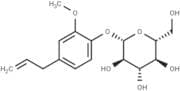
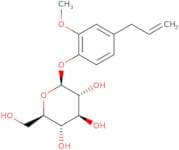
CAS 18604-50-7
:Citrusin C
Description:
Citrusin C, with the CAS number 18604-50-7, is a naturally occurring flavonoid compound primarily found in citrus fruits. It is known for its antioxidant properties, which contribute to its potential health benefits, including anti-inflammatory and anti-cancer effects. The compound exhibits a yellow to orange color, characteristic of many flavonoids, and is soluble in organic solvents but less so in water. Citrusin C is often studied for its role in plant defense mechanisms and its ability to scavenge free radicals, which can help protect cells from oxidative stress. Additionally, it may play a role in enhancing the flavor and aroma of citrus products. Research into Citrusin C continues to explore its pharmacological properties and potential applications in food and health industries, highlighting its significance in both nutrition and biochemistry.
Formula:C16H22O7
InChI:InChI=1S/C16H22O7/c1-3-4-9-5-6-10(11(7-9)21-2)22-16-15(20)14(19)13(18)12(8-17)23-16/h3,5-7,12-20H,1,4,8H2,2H3/t12-,13-,14+,15-,16-/m1/s1
InChI key:InChIKey=VADSVXSGIFBZLI-IBEHDNSVSA-N
SMILES:O([C@H]1[C@H](O)[C@@H](O)[C@H](O)[C@@H](CO)O1)C2=C(OC)C=C(CC=C)C=C2
Synonyms:- 2-Methoxy-4-(2-propen-1-yl)phenyl β-D-glucopyranoside
- Eugenol glucoside
- β-D-Glucopyranoside, 2-methoxy-4-(2-propen-1-yl)phenyl
- β-D-Glucopyranoside, 2-methoxy-4-(2-propenyl)phenyl
- Glucopyranoside, 4-allyl-2-methoxyphenyl, β-D-
Sort by
Purity (%)
0
100
|
0
|
50
|
90
|
95
|
100
Found 3 products.
Citrusin
CAS:Citrusin is a useful organic compound for research related to life sciences. The catalog number is T125506 and the CAS number is 18604-50-7.
Formula:C16H22O7Color and Shape:SolidMolecular weight:326.345Eugenol glucoside
CAS:Eugenol glucoside is a bioactive compound, which is a glucosylated derivative of eugenol, extracted from clove oil or other eugenol-rich plant sources. As a phytochemical, it exhibits diverse biological activities, thanks to its modified phenolic structure that allows enhanced solubility and stability compared to its parent compound, eugenol. The incorporation of a glucose moiety modifies its physicochemical properties, facilitating its interaction with biological membranes and enhancing its bioavailability.
Formula:C16H22O7Purity:Min. 95%Color and Shape:PowderMolecular weight:326.34 g/mol