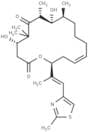
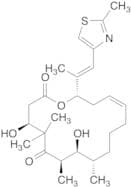
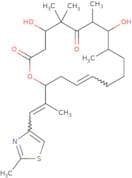
CAS 186692-73-9
:Oxacyclohexadec-13-ene-2,6-dione, 4,8-dihydroxy-5,5,7,9-tetramethyl-16-(1E)-1-methyl-2-(2-methyl-4-thiazolyl)ethenyl-, (4S,7R,8S,9S,13Z,16S)-
Description:
Oxacyclohexadec-13-ene-2,6-dione, 4,8-dihydroxy-5,5,7,9-tetramethyl-16-(1E)-1-methyl-2-(2-methyl-4-thiazolyl)ethenyl-, with the CAS number 186692-73-9, is a complex organic compound characterized by its unique bicyclic structure and multiple functional groups. This substance features a thiazole moiety, which contributes to its biological activity, and multiple hydroxyl groups that enhance its solubility and reactivity. The presence of the dione functional groups indicates potential for reactivity in various chemical processes, including hydrogen bonding and coordination with metal ions. The stereochemistry, denoted by the specific configuration at several chiral centers, suggests that the compound may exhibit specific interactions in biological systems, potentially influencing its pharmacological properties. Additionally, the compound's structural complexity may lead to interesting physical properties, such as melting point, boiling point, and solubility, which are essential for its application in fields like medicinal chemistry or agrochemicals. Overall, this compound's intricate structure and functional diversity make it a subject of interest for further research and application.
- Epothilone C
Sort by
Purity (%)
0
100
|
0
|
50
|
90
|
95
|
100
Found 4 products.
Epothilone C
CAS:Epothilone C is a polyketide natural product. It is produced through the collaborative action of a nonribosomal peptide synthetase (NRPS) and nine polyketide synthase (PKS) molecules within a multi-enzyme system. Epothilone C is utilized in tumor research.
Formula:C26H39NO5SColor and Shape:SolidMolecular weight:477.657Epothilone C
CAS:Epothilone C is a natural compound, classified as a type of polyketide. It is derived from the myxobacterium *Sorangium cellulosum*. The mode of action of Epothilone C involves the stabilization of microtubules, similar to the mechanism observed with the well-known anticancer agent, paclitaxel. This stabilization interrupts the normal process of cell division, leading to cell cycle arrest and apoptosis, particularly in rapidly dividing cancer cells.Formula:C26H39NO5SPurity:Min. 95%Molecular weight:477.7 g/mol