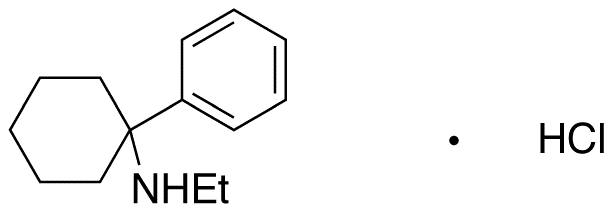
CAS 1867-64-7
:ethyl(1-phenylcyclohexyl)ammonium chloride
Description:
Ethyl(1-phenylcyclohexyl)ammonium chloride, with the CAS number 1867-64-7, is a quaternary ammonium compound characterized by its structure, which includes an ethyl group, a phenylcyclohexyl moiety, and a chloride ion. This compound typically appears as a white crystalline solid and is soluble in polar solvents such as water and alcohols, owing to the presence of the ammonium group. It exhibits properties common to ammonium salts, including potential applications in pharmaceuticals and as a surfactant. The presence of the phenylcyclohexyl group may impart unique steric and electronic properties, influencing its reactivity and interactions with biological systems. Additionally, this compound may exhibit biological activity, making it of interest in medicinal chemistry. Safety data should be consulted for handling and exposure guidelines, as with any chemical substance. Overall, ethyl(1-phenylcyclohexyl)ammonium chloride represents a versatile compound with potential applications in various fields, including organic synthesis and drug development.
Sort by
Purity (%)
0
100
|
0
|
50
|
90
|
95
|
100
Found 2 products.
Eticyclidine Hydrochloride
CAS:Controlled ProductApplications An analog of the hallucinogen Phencyclidine (P295500).
References Maddox, V.H., et al.: J. Med. Chem., 8, 230 (1965),Formula:C14H21N·ClHColor and Shape:Off-WhiteMolecular weight:239.78Cyclohexamine hydrochloride
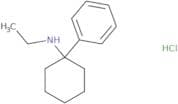
CAS:Controlled ProductCyclohexamine hydrochloride is a potent non-selective muscarinic antagonist that has been used as an anesthetic for rodents for the past three decades. It binds to the muscarinic acetylcholine receptors and blocks the effects of acetylcholine, which are involved in regulating heart rate, blood pressure, and other cardiovascular functions. It is also used to treat Alzheimer's disease by blocking acetylcholine from binding to its receptor. Cyclohexamine hydrochloride can cause psychotic symptoms such as hallucinations and delusions when taken in high doses. It may also be toxic to the cerebral cortex when administered at high doses.Formula:C14H22ClNPurity:Min. 95%Molecular weight:239.78 g/mol