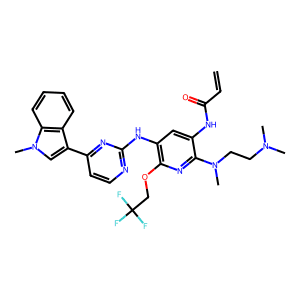
CAS 1869057-83-9
:Alflutinib
Description:
Alflutinib is a small molecule tyrosine kinase inhibitor primarily used in the treatment of non-small cell lung cancer (NSCLC) that harbors specific mutations in the epidermal growth factor receptor (EGFR) gene. It selectively targets and inhibits the activity of mutant forms of EGFR, thereby blocking the signaling pathways that promote tumor growth and survival. Alflutinib is characterized by its ability to penetrate the blood-brain barrier, making it particularly effective for treating brain metastases associated with NSCLC. The compound exhibits a favorable pharmacokinetic profile, including oral bioavailability and a manageable side effect profile, which may include skin rash, diarrhea, and liver enzyme elevations. Its mechanism of action involves competitive inhibition of ATP binding to the kinase domain of EGFR, leading to reduced phosphorylation and activation of downstream signaling pathways. Alflutinib represents a significant advancement in targeted cancer therapy, offering a more personalized approach to treatment for patients with specific genetic alterations in their tumors.
Formula:C28H31F3N8O2
Synonyms:- AST2818;AST-2818;ASK120067
- Alflutinib
- ASK120067
- 2-Propenamide, N-[2-[[2-(dimethylamino)ethyl]methylamino]-5-[[4-(1-methyl-1H-indol-3-yl)-2-pyrimidinyl]amino]-6-(2,2,2-trifluoroethoxy)-3-pyridinyl]-
Sort by
Purity (%)
0
100
|
0
|
50
|
90
|
95
|
100
Found 3 products.
Alflutinib
CAS:Alflutinib (ASK120067) is an inhibitor of EGFR, and its targets including EGFR activating mutations and T790M, thus leading to tumor growth inhibition.Formula:C28H31F3N8O2Purity:99.87%Color and Shape:SolidMolecular weight:568.59Ref: TM-T22254
1mg57.00€5mg120.00€10mg177.00€25mg356.00€50mg537.00€100mg707.00€200mg1,009.00€1mL*10mM (DMSO)152.00€Aflutinib
CAS:Aflutinib is a potent and selective inhibitor of the epidermal growth factor receptor (EGFR) tyrosine kinase. Aflutinib was developed by Pfizer and is currently in phase II clinical trials for cancer treatment. This drug has been shown to be effective against cancers that overexpress EGFR, including lung cancer, pancreatic cancer, breast cancer, colorectal cancer, and head-and-neck cancers. The mechanism of action is inhibition of DNA synthesis by blocking the phosphorylation of tyrosine residues on the EGFR receptor. Aflutinib also binds to mesenchymal markers expressed at high levels in many cancers. This binding inhibits the activation of downstream signaling pathways such as RAS/RAF/MEK/ERK and PI3K/AKT pathways, leading to cell death. Aflutinib has been shown to cause toxic epidermal necrolysis in some patients withFormula:C28H31F3N8O2Purity:Min. 95%Molecular weight:568.6 g/mol