CAS 18711-15-4
:4,6-Dichloro-1H-indole-2,3-dione
Description:
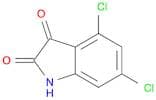
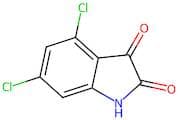
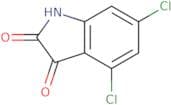
4,6-Dichloro-1H-indole-2,3-dione, with the CAS number 18711-15-4, is a synthetic organic compound that belongs to the class of indole derivatives. This substance is characterized by the presence of two chlorine atoms at the 4 and 6 positions of the indole ring, along with a diketone functional group at the 2 and 3 positions. It typically appears as a solid, and its molecular structure contributes to its potential reactivity and biological activity. The compound is known for its applications in various fields, including medicinal chemistry, where it may serve as a precursor or intermediate in the synthesis of pharmaceuticals. Its properties include moderate solubility in organic solvents and limited solubility in water, which is common for many indole derivatives. Additionally, 4,6-Dichloro-1H-indole-2,3-dione may exhibit interesting electronic properties due to the presence of the electron-withdrawing chlorine atoms, influencing its reactivity and interaction with biological targets. Safety data should be consulted for handling and usage, as with any chemical substance.
Formula:C8H3Cl2NO2
InChI:InChI=1S/C8H3Cl2NO2/c9-3-1-4(10)6-5(2-3)11-8(13)7(6)12/h1-2H,(H,11,12,13)
InChI key:InChIKey=CGCVHJCZBIYRQC-UHFFFAOYSA-N
SMILES:O=C1C=2C(NC1=O)=CC(Cl)=CC2Cl
Synonyms:- 1H-Indole-2,3-dione, 4,6-dichloro-
- 4,6-Dichloro-1H-Indole-2,3-Dione 97.0%(Min)(Hplc)
- 4,6-Dichloro-2,3-indolinedione
- 4,6-Dichloroisatin
- Indole-2,3-dione, 4,6-dichloro-
- 4,6-Dichloro-1H-indole-2,3-dione
Sort by
Purity (%)
0
100
|
0
|
50
|
90
|
95
|
100
Found 4 products.
4,6-DICHLORO-1H-INDOLE-2,3-DIONE
CAS:Formula:C8H3Cl2NO2Purity:95%Color and Shape:SolidMolecular weight:216.02094,6-Dichloro-1H-Indole-2,3-Dione
CAS:4,6-Dichloro-1H-Indole-2,3-DionePurity:98%Molecular weight:216.02g/mol4,6-Dichloroisatin
CAS:4,6-Dichloroisatin is a pro-apoptotic compound that is synthesized from amino acids. It has been shown to have anticancer activity in human liver cancer cells, which may be due to its ability to induce apoptosis. 4,6-Dichloroisatin has also been shown to inhibit the production of electron transport chain proteins in the mitochondria by binding to their regulatory sites and inhibiting their phosphorylation. This inhibition of electron transport chain proteins leads to an accumulation of electrons that can react with molecular oxygen and produce reactive oxygen species (ROS). ROS are known for their ability to cause DNA damage and cell death through oxidative stress.Formula:C8H3Cl2NO2Purity:Min. 95%Molecular weight:216.02 g/mol