CAS 18792-00-2
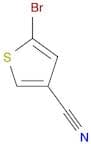
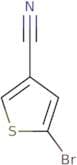
:5-bromothiophene-3-carbonitrile
Description:
5-Bromothiophene-3-carbonitrile is an organic compound characterized by its thiophene ring, which is a five-membered aromatic heterocycle containing sulfur. The presence of a bromine atom at the 5-position and a cyano group (-C≡N) at the 3-position contributes to its reactivity and potential applications in organic synthesis and materials science. This compound typically exhibits a pale yellow to light brown appearance and is soluble in organic solvents such as dichloromethane and acetone, but may have limited solubility in water due to its hydrophobic thiophene structure. The cyano group enhances its electron-withdrawing properties, making it useful in various chemical reactions, including nucleophilic substitutions and as a building block for more complex molecules. Additionally, the bromine substituent can serve as a site for further functionalization, allowing for the development of derivatives with tailored properties. Overall, 5-bromothiophene-3-carbonitrile is of interest in the fields of pharmaceuticals, agrochemicals, and materials chemistry due to its unique structural features and reactivity.
Sort by
Purity (%)
0
100
|
0
|
50
|
90
|
95
|
100
Found 4 products.
3-Thiophenecarbonitrile, 5-bromo-
CAS:Formula:C5H2BrNSPurity:97%Color and Shape:LiquidMolecular weight:188.04515-bromothiophene-3-carbonitrile
CAS:5-Bromothiophene-3-carbonitrile is a thiophene that has been substituted with two cyano groups. The 5-bromothiophene-3-carbonitrile molecule has anisotropic properties, which are due to the linear orientation of the molecules. These properties lead to refractive indices and parameters that depend on the angle of incidence. 5-Bromothiophene-3-carbonitrile can be used as a polar solvent for phenylthiophenes, biphenyls, and other compounds with similar structures because it is optically active. The molecule also has an optical activity that depends on the orientation of the dipole moment in relation to the electric field.
Formula:C5H2BrNSPurity:Min. 95%Molecular weight:188.04 g/molRef: 3D-TAA79200
Discontinued product