CAS 187960-08-3
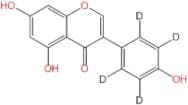
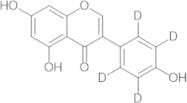
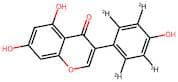
:Genistein-D4 (4-Hydroxyphenyl-2,3,5,6-D4)
Genistein-d4 (4-hydroxy-phenyl-2,3,5,6-d4)
CAS:Purity:95 atom % DColor and Shape:Off-White SolidMolecular weight:274.27Genistein-2’,3’,5’,6’-d4 (Major)
CAS:Controlled ProductApplications Exhibits specific inhibitory activity against tyrosine kinases,including autophosphorylation of epidermal growth factor receptor kinase (IC50 - 2.6uM). Also inhibits other protein kinases through competitive inhibition of ATP. Inhibits tumor cell proliferation and induces tumor cell differentiation. Produces cell-cycle arrest and apoptosis in Jurat T-leukemia cells. However, it prevents anti-CD3 monoclonal antibody-induced thymic apoptosis. Genistein also inhibits topoisomerase II activity in vitro. Genistein has also been shown to inhibit the action of GABA on recombinant GABAA receptors2. uv(max)ethanol: 262.5 nm (e= 138). moderately sol. in hot alcohol
References Akiyama, T., et al.: J. Biol. Chem., 262, 5592 (1987), O'Dell, T.J., et al.: Nature, 353, 588 (1991), Aharonovits, O., et al.: Biochim Biophys. Acta, 1112, 181 (1992), Platanias, L.C., et al.: J. Biol. Chem., 267, 24053 (1992), Yoshida, H., et al.: Biochim. Biophys. Acta, 1137, 321 (1992), Uckun, F.M., et al.: Science, 267, 886 (1995)Merck Index 12th ed. 43952. Huang, R.Q.; Fang, M.J.; Dillon, G.H., Mol. Brain Res. 67: 177-183 (1999)Formula:C152H4H6O5Color and Shape:NeatMolecular weight:274.264H-1-Benzopyran-4-one, 5,7-dihydroxy-3-(4-hydroxyphenyl-2,3,5,6-d4)-
CAS:Formula:C15H6D4O5Purity:98.81%Color and Shape:SolidMolecular weight:274.2615