CAS 1885-22-9
:Bromomalononitrile
Description:
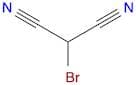
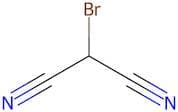
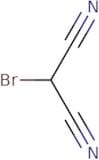
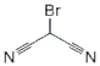
Bromomalononitrile, with the CAS number 1885-22-9, is a chemical compound characterized by its structure, which includes a bromine atom and two cyano (nitrile) groups attached to a malonic acid framework. It is typically a colorless to pale yellow liquid or solid, depending on its physical state at room temperature. This compound is known for its reactivity, particularly in nucleophilic substitution reactions, due to the presence of the bromine atom, which can be replaced by various nucleophiles. Bromomalononitrile is often used as an intermediate in organic synthesis, particularly in the preparation of various pharmaceuticals and agrochemicals. It is also notable for its potential applications in the synthesis of heterocyclic compounds. Safety precautions should be taken when handling this substance, as it can be toxic and irritant, necessitating the use of appropriate personal protective equipment. Overall, bromomalononitrile is a versatile compound in synthetic organic chemistry, valued for its reactivity and utility in producing more complex chemical entities.
Formula:C3HBrN2
InChI:InChI=1/C3HBrN2/c4-3(1-5)2-6/h3H
SMILES:C(#N)C(C#N)Br
Synonyms:- Bromomalonitrile
- Propanedinitrile, bromo-
- Bromopropanedinitrile
Sort by
Purity (%)
0
100
|
0
|
50
|
90
|
95
|
100
Found 4 products.
Propanedinitrile, 2-bromo-
CAS:Formula:C3HBrN2Purity:95%Color and Shape:SolidMolecular weight:144.95742-Bromopropanedinitrile
CAS:2-Bromopropanedinitrile is an organic solvent that is used as a reactant in the production of polyurethane. It has been shown to have antibacterial activity against a number of bacteria, including Escherichia coli, Staphylococcus aureus, Bacillus subtilis, and Proteus vulgaris. 2-Bromopropanedinitrile exhibits its antimicrobial effect by reacting with the chloride ion and nucleophilic attack on the carbonyl group. This reaction causes the chemical to polymerize and form cross-links between molecules of DNA. The compound also has antifungal properties, which may be due to its hydroxyl groups or hydrogenated side chains.
Formula:C3HBrN2Purity:Min. 95%Molecular weight:144.96 g/mol