CAS 189161-09-9
:3-Chloro-5-methylbenzonitrile
Description:
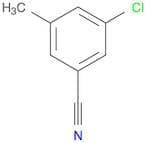
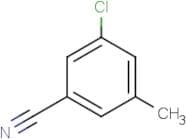
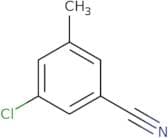
3-Chloro-5-methylbenzonitrile is an organic compound characterized by its aromatic structure, which includes a benzene ring substituted with a chlorine atom and a nitrile group. The presence of the chlorine atom at the meta position and a methyl group at the para position relative to the nitrile group influences its chemical reactivity and physical properties. This compound typically appears as a colorless to pale yellow solid or liquid, depending on its purity and form. It is known for its applications in organic synthesis, particularly in the production of pharmaceuticals and agrochemicals. The nitrile functional group contributes to its polarity, making it soluble in polar organic solvents. Additionally, 3-Chloro-5-methylbenzonitrile may exhibit moderate toxicity, necessitating careful handling and appropriate safety measures during use. Its molecular structure allows for various chemical reactions, including nucleophilic substitutions and electrophilic aromatic substitutions, making it a versatile intermediate in synthetic chemistry.
Formula:C8H6ClN
InChI:InChI=1S/C8H6ClN/c1-6-2-7(5-10)4-8(9)3-6/h2-4H,1H3
SMILES:Cc1cc(cc(c1)Cl)C#N
Synonyms:- Benzonitrile, 3-chloro-5-methyl-
- 3-Chloro-5-methylbenzonitrile
Sort by
Purity (%)
0
100
|
0
|
50
|
90
|
95
|
100
Found 4 products.
Benzonitrile, 3-chloro-5-methyl-
CAS:Formula:C8H6ClNPurity:97%Color and Shape:SolidMolecular weight:151.59293-Chloro-5-methylbenzonitrile
CAS:3-Chloro-5-methylbenzonitrilePurity:97%Molecular weight:151.59g/mol3-Chloro-5-methylbenzonitrile
CAS:Formula:C8H6ClNPurity:97%Color and Shape:SolidMolecular weight:151.593-Chloro-5-methylbenzonitrile
CAS:3-Chloro-5-methylbenzonitrile belongs to the class of carboxylic arylboronic acids, which are used in the synthesis of amides, ketones, and esters. The transformation of 3-chloro-5-methylbenzonitrile can be achieved by nitriles or tetrazoles. Nitriles are converted into cyanation products by treatment with hydrogen cyanide (HCN). Tetrazole is converted into a heteroarene by treatment with sodium azide (NaN3). The resulting heteroarenes can react with an ester to produce a substituted benzene.Formula:C8H6ClNPurity:Min. 95%Molecular weight:151.59 g/mol