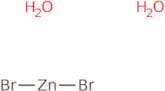
CAS 18921-13-6
:ZINC BROMIDE DIHYDRATE 99
Description:
Zinc bromide dihydrate (CAS 18921-13-6) is an inorganic compound characterized by its chemical formula ZnBr2·2H2O. It appears as a white crystalline solid that is highly soluble in water, forming a clear solution. This compound is hygroscopic, meaning it can absorb moisture from the air, which is a key consideration for storage and handling. Zinc bromide dihydrate is commonly used in various applications, including as a reagent in chemical synthesis, in the preparation of zinc-based catalysts, and in the oil and gas industry for well completion fluids due to its ability to increase density. It exhibits properties typical of ionic compounds, such as high melting and boiling points. Additionally, it can act as a Lewis acid, participating in coordination chemistry. Safety precautions are necessary when handling this substance, as it can be irritating to the skin, eyes, and respiratory tract. Proper personal protective equipment should be used to mitigate exposure risks.
Formula:Br2H4O2Zn
Synonyms:- Zinc(Ii)Bromidedihydrate
- Zinc bromide dihydrate 99%
- Zinc bromide dihydrate≥ 99% (Assay)
- dibromozinc,dihydrate
- ZINC BROMIDE DIHYDRATE 99
- Zinc, diaquadibromo-,(T-4)- (9CI)
Sort by
Purity (%)
0
100
|
0
|
50
|
90
|
95
|
100
Found 1 products.
Zinc bromide dihydrate
CAS:Zinc bromide dihydrate is a crystalline compound that is used as a catalyst for the conversion of metalloporphyrins to hydroporphyrins. This process is used in the production of vitamin B12. Zinc bromide dihydrate can also be used to inhibit the function of ion pumps, which are proteins that pump ions across membranes. The inhibition of these pumps may lead to a decrease in intracellular calcium levels and an increase in free radicals.
Zinc bromide dihydrate has been shown to react with chlorophylls, vinylated heterostructures, and polyvinyl nonmetals. These reactions produce morphology changes in zinc bromide dihydrate crystalsFormula:ZnBr2•2H2OPurity:Min. 95%Color and Shape:PowderMolecular weight:261.22 g/mol