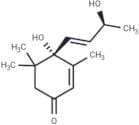
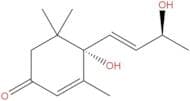
![2-Cyclohexen-1-one,4-hydroxy-4-[(1E,3S)-3-hydroxy-1-butenyl]-3,5,5-trimethyl-, (4S)-](/_next/image/?url=https%3A%2Fstatic.cymitquimica.com%2Fcas-image%2Fthumb-webp%2F316146-corchoiol-c.webp&w=3840&q=75)
CAS 189351-15-3
:2-Cyclohexen-1-one,4-hydroxy-4-[(1E,3S)-3-hydroxy-1-butenyl]-3,5,5-trimethyl-, (4S)-
Description:
2-Cyclohexen-1-one, 4-hydroxy-4-[(1E,3S)-3-hydroxy-1-butenyl]-3,5,5-trimethyl-, (4S)-, identified by CAS number 189351-15-3, is an organic compound characterized by its complex structure featuring a cyclohexene ring with various functional groups. This compound contains a ketone group, a hydroxyl group, and a substituted butenyl chain, contributing to its reactivity and potential biological activity. The presence of multiple chiral centers indicates that it can exist in different stereoisomeric forms, which may influence its chemical behavior and interactions. Typically, compounds of this nature may exhibit properties such as solubility in organic solvents, potential for hydrogen bonding due to hydroxyl groups, and reactivity in various organic reactions. Its structural features suggest possible applications in fields such as pharmaceuticals, agrochemicals, or as intermediates in organic synthesis. However, specific physical properties like melting point, boiling point, and solubility would require empirical data for precise characterization.
Formula:C13H20O3
Synonyms:- Corchoionol C
- 2-Cyclohexen-1-one, 4-hydroxy-4-[(1E,3S)-3-hydroxy-1-buten-1-yl]-3,5,5-trimethyl-, (4S)-
- Corchoiol C
- Corchoionoside C aglycon
Sort by
Purity (%)
0
100
|
0
|
50
|
90
|
95
|
100
Found 4 products.
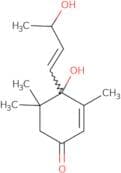
2-Cyclohexen-1-one, 4-hydroxy-4-[(1E,3S)-3-hydroxy-1-buten-1-yl]-3,5,5-trimethyl-, (4S)-
CAS:Formula:C13H20O3Purity:96.0%Molecular weight:224.2961Corchoionol C
CAS:Corchoionol C is a natural product for research related to life sciences. The catalog number is TN3698 and the CAS number is 189351-15-3.Formula:C13H20O3Purity:98%Color and Shape:SolidMolecular weight:224.3Corchoionol C
CAS:Corchoionol C is an organic compound, which is a phytochemical derived from the bark of cork oak trees. It exhibits potent antimicrobial properties through its mode of action, which involves disrupting microbial cell membranes and inhibiting essential enzymatic processes within pathogenic organisms. This disruption leads to cell lysis and eventual microbial death, making it a promising candidate in the field of antimicrobial research.Formula:C13H20O3Purity:Min. 95%Molecular weight:224.3 g/mol
![2-Cyclohexen-1-one, 4-hydroxy-4-[(1E,3S)-3-hydroxy-1-buten-1-yl]-3,5,5-trimethyl-, (4S)-](/_next/image/?url=https%3A%2Fstatic.cymitquimica.com%2Fproducts%2FIN%2Fthumb%2FDA002ICJ.jpg&w=3840&q=75)