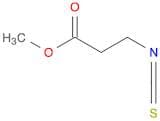
CAS 18967-35-6
:Methyl 3-isothiocyanatopropionate
Description:
Methyl 3-isothiocyanatopropionate, with the CAS number 18967-35-6, is an organic compound characterized by the presence of an isothiocyanate functional group. This compound typically appears as a colorless to pale yellow liquid and has a distinctive, pungent odor reminiscent of mustard or horseradish, which is common among isothiocyanates. It is soluble in organic solvents but has limited solubility in water. Methyl 3-isothiocyanatopropionate is known for its potential applications in the fields of agriculture, particularly as a pesticide or herbicide, due to its bioactive properties. Additionally, it may be utilized in the synthesis of various chemical compounds in organic chemistry. The compound's reactivity is influenced by the isothiocyanate group, which can participate in nucleophilic reactions, making it a valuable intermediate in chemical synthesis. Safety precautions should be observed when handling this substance, as isothiocyanates can be irritants and may pose health risks if inhaled or ingested.
Formula:C5H7NO2S
InChI:InChI=1/C5H7NO2S/c1-8-5(7)2-3-6-4-9/h2-3H2,1H3
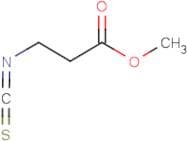
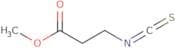
SMILES:COC(=O)CCN=C=S
Synonyms:- 3-Isothiocyanatopropionic acid methyl ester
- methyl N-(thioxomethylidene)-beta-alaninate
Sort by
Purity (%)
0
100
|
0
|
50
|
90
|
95
|
100
Found 3 products.
Methyl 3-isothiocyanatopropionate
CAS:Methyl 3-isothiocyanatopropionatePurity:≥95%Molecular weight:145.18g/molMethyl 3-isothiocyanatopropionate
CAS:Methyl 3-isothiocyanatopropionate is a synthetic chemical that has been shown to inhibit the growth of cancer cells. It is a fluorophore and can be used as a tracer for in vivo studies. Methyl 3-isothiocyanatopropionate binds to thiol groups on proteins, which can lead to modifications of the protein and its function. The compound has been shown to induce phosphorylation of LPS-induced TNFR-α (Tumor Necrosis Factor Receptor) in mice. This effect was not observed with other thioureas. The molecule is reactive and reacts with nucleic acids and proteins. Methyl 3-isothiocyanatopropionate may also have anti-inflammatory properties due to its ability to inhibit the production of TNF-α (Tumor Necrosis Factor) from stimulated immune cells, but this has not been confirmed by experiments.Formula:C5H7NO2SPurity:Min. 95%Molecular weight:145.18 g/mol