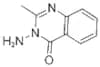
CAS 1898-06-2
:2-METHYL-3-AMINO-4-QUINAZOLONE
Description:
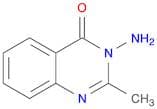
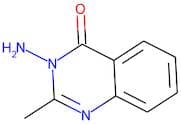
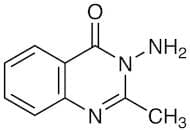
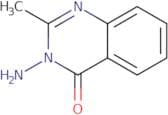
2-Methyl-3-amino-4-quinazolone is an organic compound characterized by its quinazolone structure, which consists of a fused benzene and pyrimidine ring. This compound features a methyl group at the second position and an amino group at the third position of the quinazolone ring, contributing to its unique chemical properties. It is typically a crystalline solid and may exhibit solubility in polar solvents due to the presence of the amino group, which can engage in hydrogen bonding. The compound is of interest in medicinal chemistry, particularly for its potential biological activities, including antimicrobial and anticancer properties. Its molecular structure allows for various chemical modifications, which can enhance its pharmacological profile. As with many quinazolone derivatives, it may also participate in various chemical reactions, such as nucleophilic substitutions or cyclizations, making it a versatile building block in organic synthesis. Safety data should be consulted for handling and usage, as with any chemical substance.
Formula:C9H9N3O
Synonyms:- Iflab-Bb F0307-0682
- Asischem W61338
- 3-Amino-2-Methyl-3,4-Dihydroquinazolin-4-One
- 3-Amino-2-Methyl-3 H-Quinazolin-4-One
- 3-Amino-2-Methyl-4(3H)Quinazolinone
- Akos B028736
- Akos Au36-M15
Sort by
Purity (%)
0
100
|
0
|
50
|
90
|
95
|
100
Found 5 products.
3-amino-2-methyl-3,4-dihydroquinazolin-4-one
CAS:Formula:C9H9N3OPurity:96%Color and Shape:SolidMolecular weight:175.18733-Amino-2-methyl-3,4-dihydroquinazolin-4-one
CAS:3-Amino-2-methyl-3,4-dihydroquinazolin-4-onePurity:≥95%3-Amino-2-methylquinazolin-4(3H)-one
CAS:Formula:C9H9N3OPurity:>98.0%(T)(HPLC)Color and Shape:White to Light yellow powder to crystalMolecular weight:175.193-Amino-2-methylquinazolin-4(3H)-one
CAS:Controlled Product3-Amino-2-methylquinazolin-4(3H)-one is a bidentate ligand that has been shown to have antibacterial and anticancer activity. The functional theory of the compound is based on its ability to form an imine nitrogen with metal ions such as Fe(II) or Cu(II). 3-Amino-2-methylquinazolin-4(3H)-one is not active against Staphylococcus aureus, but inhibits the growth of other bacteria by binding to their ribosomes and inhibiting protein synthesis. 3-Amino-2-methylquinazolin-4(3H)-one also has in vitro anticancer activity, which may be due to its ability to inhibit DNA synthesis and cell division.Formula:C9H9N3OPurity:Min. 95%Molecular weight:175.19 g/mol