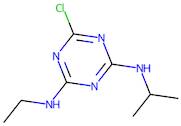
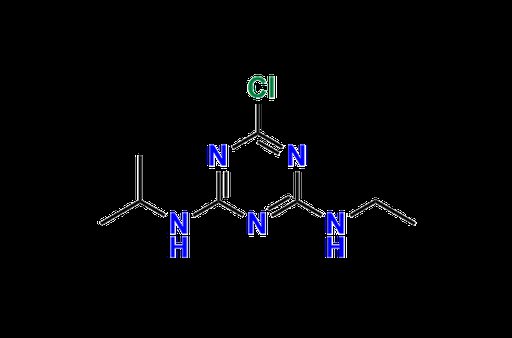
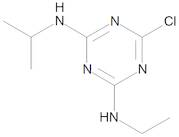
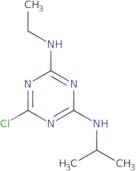
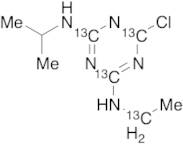
CAS 1912-24-9
:Atrazine
- 1,3,5-Triazine-2,4-diamine, 6-chloro-N-ethyl-N'-(1-methylethyl)-
- 1,3,5-Triazine-2,4-diamine, 6-chloro-N2-ethyl-N4-(1-methylethyl)-
- 1,3,5-Triazine-2,4-diamine, 6-chloro-N<sup>2</sup>-ethyl-N<sup>4</sup>-(1-methylethyl)-
- 1-Chloro-3-ethylamino-5-isopropylamino-2,4,6-triazine
- 2-Chloro-4-(ethylamino)-6-(2-propylamino)-s-triazine
- 2-Chloro-4-(ethylamino)-6-(isopropylamino)-s-triazine
- 2-Chloro-4-(ethylamino)-6-(isopropylamino)triazine
- 2-Chloro-4-Ethylamino-6-Isopropylamino-1,3,5-Triazine
- 2-Chloro-4-ethylamineisopropylamine-s-triazine
- 2-Chloro-6-ethylamino-4-isopropylamino-1,3,5-triazine
- 2-Ethylamino-4-isopropylamino-6-chloro-1,3,5-triazine
- 2-Ethylamino-4-isopropylamino-6-chloro-s-triazine
- 2-chloro-N4-ethyl-N6-(1-methylethyl)-1,2-dihydro-1,2,3-triazine-4,6-diamine
- 6-Chloro-4-(ethylamino)-2-(isopropylamino)-s-triazine
- 6-Chloro-N-ethyl-N'-(1-methylethyl)-1,3,5-triazine-2,4-diamine
- 6-Chloro-N<sup>2</sup>-ethyl-N<sup>4</sup>-(1-methylethyl)-1,3,5-triazine-2,4-diamine
- 6-chloro-N-ethyl-N'-(propan-2-yl)-1,3,5-triazine-2,4-diamine
- A 361
- AAtrex
- AAtrex 4L
- AAtrex Nine-O
- ATZ
- Aatrax
- Aatrex 4LC
- Aatrex L
- Akticon
- Aktikon
- Aktikon PK
- Aktinit A
- Aktinit PK
- Argezin
- Atanor 50 SC
- Atradex
- Atragranz
- Atraizine
- Atranex
- Atranex 80WP
- Atraphyt
- Atrasan
- Atrataf
- Atrazerba FL
- Atrazin
- Atrazina
- Atrazine W.P.
- Atrazine suspensoid
- Azoprim
- Azoprim 50
- CET
- Chromozin
- Cyazin
- Farmozine
- G 30027
- Gesamprim
- Gesaprim
- Gesaprim 50
- Gesaprim 500
- Gesaprim L
- Herbatoxol
- Hungazin
- Hungazin PK
- Nortox 500SC
- Nsc 163046
- Nu-Trazine
- Oleogesaprim
- Oleogesaprim 200
- Primatol A
- Primoleo
- Radazin
- Radazin T
- Triazine A 1294
- Wonuk
- Zealin L
- Zeapos
- Zeazin
- Zeazine
- Zeopos
- s-Triazine, 2-chloro-4-(ethylamino)-6-(isopropylamino)-
- See more synonyms
6-Chloro-N4-ethyl-N2-isopropyl-1,3,5-triazine-2,4-diamine
CAS:Controlled Product6-Chloro-N4-ethyl-N2-isopropyl-1,3,5-triazine-2,4-diamine
Color and Shape:PowderMolecular weight:215.68g/molAtrazine
CAS:Controlled ProductApplications Selective herbicide. Potential symptoms of overexposure are irritation of eyes and skin; dermatitis, skin sensitization; dyspnea, weakness, incoordination, salivation; hypothermia; liver injury.This compound is a contaminant of emerging concern (CECs)
Not a dangerous good if item is equal to or less than 1g/ml and there is less than 100g/ml in the package
References Dalgaard-Mikkelsen, S., et al.: Pharmacol. Rev., 14, 225 (1962), Muller, K., et al.: J. Environ. Qual., 31, 309 (2002), Backhaus, T., et al.: Environ. Toxicol. Chem., 23, 258 (2004),Formula:C8H14ClN5Color and Shape:NeatMolecular weight:215.68Atrazine
CAS:Controlled ProductAtrazine is a triazine herbicide that is used to control weeds in crops, such as corn and sugarcane. It has been shown to have genotoxic effects on the calf-thymus DNA in vitro. Atrazine also inhibits the enzyme activity of certain enzymes, including the basic protein and colloidal gold. Atrazine can cause toxic effects when ingested or absorbed by animals and humans, which may be due to its ability to inhibit cellular respiration by binding with cytochrome P450. This binding prevents oxygen from binding with hemoglobin for transport throughout the body, leading to anoxia in cells. Atrazine is also known to affect plant metabolism and histological analysis.
Formula:C8H14ClN5Purity:Min. 96 Area-%Color and Shape:White Off-White PowderMolecular weight:215.68 g/mol