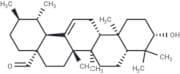
CAS 19132-81-1
:Ursolic aldehyde
Description:
Ursolic aldehyde, with the CAS number 19132-81-1, is a naturally occurring organic compound classified as a triterpenoid. It is primarily found in various plants, particularly in the leaves of the apple tree and other members of the Rosaceae family. This compound is characterized by its white crystalline solid form and has a molecular formula that reflects its complex structure. Ursolic aldehyde exhibits a range of biological activities, including anti-inflammatory, antioxidant, and antimicrobial properties, making it of interest in pharmacological research. Its structure features a cyclopentane ring fused to a cyclohexene, along with an aldehyde functional group, which contributes to its reactivity and potential applications in medicinal chemistry. Additionally, it is known for its role in traditional medicine and as a potential therapeutic agent in various health conditions. The compound's solubility varies in different solvents, and it is often studied for its effects on cellular processes and its potential benefits in health and wellness.
Formula:C30H48O2
Synonyms:- Ursolic aldehyde
Sort by
Purity (%)
0
100
|
0
|
50
|
90
|
95
|
100
Found 2 products.
Ursolic aldehyde
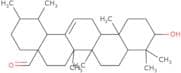
CAS:Ursolic aldehyde can inhibit phosphatase of regenerating liver-3, with the IC(50) value of 50 +/- 0.3 mu M.Formula:C30H48O2Purity:98%Color and Shape:SolidMolecular weight:440.7Ursolic aldehyde
CAS:Controlled ProductUrsolic aldehyde is a low energy, hydrophobic, and odorless substance that belongs to the group of terpenes. It is found in many plants and has been shown to have neuroprotective effects in vitro. Ursolic aldehyde has been shown to inhibit cholesterol acyltransferase (ACAT) and be involved in lowering blood glucose levels in diabetic mice. Ursolic aldehyde also inhibits the enzyme ptp1b, which is involved in insulin resistance, obesity, and type 2 diabetes. This compound is not toxic because it does not form covalent bonds with DNA or proteins. Ursolic aldehyde also inhibits tumor growth by inducing apoptosis of cancer cells.
Formula:C30H48O2Purity:Min. 95%Molecular weight:440.7 g/mol