CAS 19172-47-5
:Lawesson's reagent
Description:
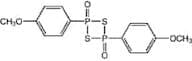
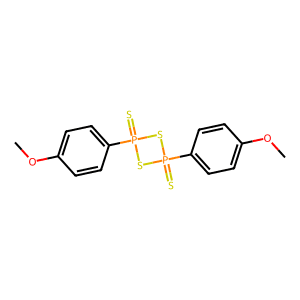
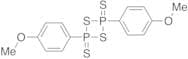
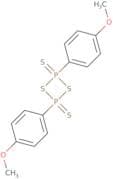
Lawesson's reagent, with the CAS number 19172-47-5, is a chemical compound primarily used as a thioketone and a reagent in organic synthesis. It is characterized by its ability to convert carbonyl compounds into thiones, which are sulfur analogs of ketones. The reagent is typically a yellow to brown solid and is known for its stability under ambient conditions. Lawesson's reagent is often utilized in the synthesis of various sulfur-containing compounds, including thioesters and thioketones, making it valuable in medicinal chemistry and material science. Its reactivity is attributed to the presence of phosphorus and sulfur in its structure, which facilitates nucleophilic attack on electrophilic carbonyl groups. Additionally, it is important to handle Lawesson's reagent with care due to its potential toxicity and the need for appropriate safety measures during use. Overall, Lawesson's reagent is a versatile tool in synthetic organic chemistry, particularly for the functionalization of carbonyl compounds.
Formula:C14H14O2P2S4
InChI:InChI=1S/C14H14O2P2S4/c1-15-11-3-7-13(8-4-11)17(19)21-18(20,22-17)14-9-5-12(16-2)6-10-14/h3-10H,1-2H3
InChI key:InChIKey=CFHGBZLNZZVTAY-UHFFFAOYSA-N
SMILES:S=P1(SP(=S)(S1)C2=CC=C(OC)C=C2)C3=CC=C(OC)C=C3
Synonyms:- 1,3,2,4-Dithiadiphosphetane, 2,4-bis(4-methoxyphenyl)-, 2,4-disulfide
- 19172-47-5
- 2,4-(4-Methoxyphenyl)-1,3,2,4-dithiadiphosphetane-2,4-disulfide
- 2,4-Bis(4-Methoxyphenyl)-1,3,2,4-Dithiadiphosphetane-2,4-Disulfide
- 2,4-Bis(4-Methoxyphenyl)-1,3-Dithia-2,4-Diphosphetane-2,4-Disulfide
- 2,4-Bis(4-methoxyphenyl)-2,4-dithioxo-1,3,2,4-dithiadiphosphetane
- 2,4-Bis(p-methoxyphenyl)-1,3,2,4-dithiadiphosphetane 2,4-disulfide
- 2,4-Di(p-methoxyphenyl)-1,3-dithiadiphosphetane disulfide
- 242-855-4
- Lawesson reagent
- NSC 150550
- Phosphonotrithioic acid, (p-methoxyphenyl)-, bimol. cyclic anhydrosulfide
- Reagents, Lawesson's
- p-Anisyldithiophosphonic anhydride
- p-Methoxyphenylthionophosphine sulfide dimer
- See more synonyms
Sort by
Purity (%)
0
100
|
0
|
50
|
90
|
95
|
100
Found 8 products.
Lawesson's Reagent [Sulfurating Reagent]
CAS:Formula:C14H14O2P2S4Purity:>93.0%(T)Color and Shape:White to Light yellow to Green powder to crystalMolecular weight:404.45Lawesson's Reagent, 97%
CAS:Lawesson's reagent is a thiation agent used to convert carbonyl compounds into thiocarbonyls. It is also used to thionate enones, esters, lactones, amides, lactams and quinones. Further, it is used to prepare thiols from alcohols. It is associated with silver perchlorate and utilized as and oxophili
Formula:C14H14O2P2S4Purity:97%Color and Shape:White to pale cream or pale yellow, Crystals or powder or crystalline powderMolecular weight:404.452,4-Bis(4-methoxyphenyl)-2,4-dithioxo-1,3,2,4-dithiadiphosphetane
CAS:2,4-Bis(4-methoxyphenyl)-2,4-dithioxo-1,3,2,4-dithiadiphosphetanePurity:95%Molecular weight:404.47g/molLawesson's reagent
CAS:Lawesson's reagent is a thiation agent. It is incompatible with strong oxidizing agents.Formula:C14H14O2P2S4Purity:98%Color and Shape:Light Yellow To Beige PowderMolecular weight:404.47Lawesson reagent
CAS:Formula:C14H14O2P2S4Purity:(Titration) ≥ 96.0%Color and Shape:Off-white to light-yellow or pale beige-brown powderMolecular weight:404.47Lawesson’s Reagent
CAS:Controlled ProductApplications Lawesson’s Reagent is used primarily in the conversion of carbonyls to thiocarbonyls. It is also used in the synthesis of β-D-ribonucleosides.
Not a dangerous good if item is equal to or less than 1g/ml and there is less than 100g/ml in the package
References Shimomura, N. et al.: Bull. Chem. Jpn., 67, 3100 (1994); Wang, F. et al.: Sens. Actu. Chem., 161, 948 (2012);Formula:C14H14O2P2S4Color and Shape:NeatMolecular weight:404.467Lawesson's reagent
CAS:Lawesson's reagent is a solution of copper(II) acetate, ammonium chloride and hydrochloric acid. It is used in organic chemistry as an oxidizing agent for the conversion of amines to nitro compounds. Lawesson's reagent is also used in vitro as an antifungal agent. The mechanism of action is not fully understood, but it appears to act by producing reactive oxygen species that cause oxidative damage to fungal cell membranes. In addition, Lawesson's reagent has anti-inflammatory properties and can be used as a pharmaceutical preparation.Formula:C14H14O2P2S4Purity:(%) Min. 98%Color and Shape:Off-White PowderMolecular weight:404.47 g/mol
![Lawesson's Reagent [Sulfurating Reagent]](/_next/image/?url=https%3A%2Fstatic.cymitquimica.com%2Fproducts%2F3B%2Fthumb%2FB1133.jpg&w=3840&q=75)