CAS 191723-66-7
:L-threonine 7-amido-4-methylcoumarin
Description:
L-threonine 7-amido-4-methylcoumarin is a synthetic compound that serves as a substrate for various biochemical assays, particularly in the study of proteolytic enzymes. This compound features a coumarin moiety, which is known for its fluorescent properties, making it useful in fluorescence-based detection methods. The presence of the L-threonine amino acid contributes to its specificity in enzymatic reactions, as it can be recognized by certain proteases. The amido group enhances the solubility and stability of the compound in aqueous solutions. In terms of its physical properties, L-threonine 7-amido-4-methylcoumarin is typically a solid at room temperature and may exhibit a characteristic fluorescence when excited by specific wavelengths of light. Its applications extend to biochemical research, particularly in the fields of enzymology and molecular biology, where it is utilized to study enzyme kinetics and mechanisms. As with many synthetic compounds, proper handling and storage conditions are essential to maintain its integrity and effectiveness in experimental settings.
Formula:C14H16N2O4.HCl
Synonyms:- H-Thr-AMC
Sort by
Purity (%)
0
100
|
0
|
50
|
90
|
95
|
100
Found 3 products.
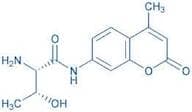
H-Thr-AMC
CAS:Bachem ID: 4005542.
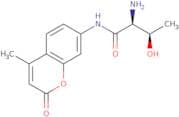
Formula:C14H16N2O4Purity:> 98%Color and Shape:WhiteMolecular weight:276.29Butanamide, 2-amino-3-hydroxy-N-(4-methyl-2-oxo-2H-1-benzopyran-7-yl)-, (2S,3R)-
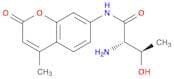
CAS:Formula:C14H16N2O4Molecular weight:276.2878H-Thr-AMC
CAS:H-Thr-AMC is a small molecule that binds to the ubiquitin-proteasome system and inhibits the degradation of proteins. It has been shown to inhibit methionine aminopeptidase, which is an enzyme that degrades amino acids in the intestine. H-Thr-AMC also has a metal chelator effect, which prevents it from being degraded by proteases. The sequence of H-Thr-AMC was derived by sequencing cDNA from eukaryotes. H-Thr-AMC is not active against aminopeptidase A, but can inhibit aminopeptidase B and C. H-Thr-AMC has been shown to have inhibitory effects on both intestinal and physiological properties.br>br>
H-Thr-AMC is a substrate for the peptide:hydrolase (peptidase) family of enzymes known as aminopeptidFormula:C14H16N2O4Color and Shape:White PowderMolecular weight:276.29 g/molRef: 3D-FT110528
Discontinued product