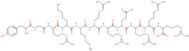
CAS 191936-91-1
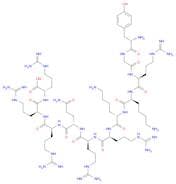
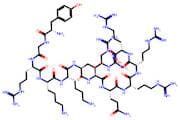
:H-TYR-GLY-ARG-LYS-LYS-ARG-ARG-GLN-ARG-ARG-ARG-OH
- Hiv-1 Tat Protein (47-57)
- Hiv-1 Tat Protein Peptide
- Tat (47-57)
- Tyr-Gly-Arg-Lys-Lys-Arg-Arg-Gln-Arg-Arg-Arg
- Ygrkkrrqrrr
HIV-1 tat Protein (47-57)
CAS:YGRKKRRQRRR, a cell-permeable peptide (CPP) derived from the HIV-1 tat protein transduction domain (PTD), has been shown to promote the entry of nucleic acids into several cell types.Formula:C64H118N32O14Purity:> 95%Color and Shape:White PowderMolecular weight:1559.85HIV-1 TAT Protein Peptide (47-57)
CAS:Formula:C64H118N32O14Purity:98%Color and Shape:SolidMolecular weight:1559.8277TAT
CAS:TAT peptide (YGRKKRRQRRR), originating from the human immunodeficiency virus-1 (HIV-1) transactivator of transcription (TAT), enhances the solubility andFormula:C64H118N32O14Purity:>99.99%Color and Shape:SolidMolecular weight:1559.83TAT (47-57) TFA salt
CAS:Amino acids 47-57 of the Human Immunodeficiency Virus (HIV) viral coat trans-activator of transcription protein (TAT protein). TAT is a cell penetrating peptide meaning it has the ability to transport itself across cell membranes and into a cell's nucleus independently. Cell penetrating peptides (CPPs) can be used to carry other molecules into the cell and therefore can be used in many applications. Such applications may include: drug delivery, where small drug peptides or nucleic acids can be delivered into target cells or where CPPs are conjugated to imaging agents such as fluorescent dyes or radiolabeled molecules they can be used for in vivo or in vitro imaging in diagnostics.
This product is available as a trifluroacetate salt.Formula:C64H118N32O14Purity:Min. 95%Molecular weight:1,559.86 g/molTAT (47-57)
CAS:Tat (47-57) is a cell penetrating cationic peptide derived from the N-terminus of the Tat protein, which is a trans-activator of the transcription protein present in the human immunodeficiency virus (HIV). Specifically TAT (47-57) is located within the arginine-rich basic domain 48-60 of the TAT peptide which as a whole has three domains which function to aid HIV through transactivation, DNA binding and nuclear transport. As a cell penetrating peptide (CPP) TAT aids in the cellular uptake of molecules and hence serves a valuable purpose in transduction methods. This property has been demonstrated through its ability of allowing toxins such as the neurotoxin Botulinum neurotoxin Type A, produced by the Clostridium botulinum type A bacteria to penetrate the skin barrier non-invasively. Additionally TAT (47-57) can be used to deliver proteins, fluorophores, chelators and DNA to target cells.
Formula:C64H118N32O14Color and Shape:PowderMolecular weight:1,559.83 g/molHIV-1 tat Protein (47-57)
CAS:TFA Salt. Cell penetrating peptide derived from the HIV-1 tat protein transduction domain (PTD), has been shown to promote the entry of nucleic acids into several cell types. For different specs please use the Peptide Quote ToolFormula:C64H118N32O14Molecular weight:1,559.9 g/mol