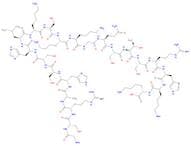
CAS 192122-40-0
:CELLULAR TUMOR ANTIGEN P53 (361-382) (HUMAN)
Description:
Cellular Tumor Antigen p53 (361-382) (Human), associated with the CAS number 192122-40-0, is a peptide derived from the human p53 protein, which plays a crucial role in regulating the cell cycle and maintaining genomic stability. This peptide corresponds to a specific sequence within the p53 protein, which is known for its function as a tumor suppressor. The p53 protein is involved in various cellular processes, including DNA repair, apoptosis, and cell cycle regulation, making it vital for preventing cancer development. The peptide itself is often studied in the context of immunology and cancer research, particularly for its potential role in eliciting immune responses against tumors. Characteristics of this peptide include its ability to bind to MHC molecules, facilitating T-cell recognition, and its potential use in vaccine development or as a biomarker for cancer diagnostics. Overall, the p53 peptide is significant in understanding tumor biology and developing therapeutic strategies against malignancies.
Formula:C100H174N40O31
Synonyms:- P53 (361-382) (Human)
- H-GLY-SER-ARG-ALA-HIS-SER-SER-HIS-LEU-LYS-SER-LYS-LYS-GLY-GLN-SER-THR-SER-ARG-HIS-LYS-LYS-OH
- CELLULAR TUMOR ANTIGEN P53 (361-382) (HUMAN)
- PEPTIDE 46
- Glycyl-L-seryl-L-arginyl-L-alanyl-L-histidyl-L-seryl-L-seryl-L-histidyl-L-leucyl-L-lysyl-L-seryl-L-lysyl-L-lysylglycyl-L-glutaminyl-L-seryl-L-threonyl-L-seryl-L-arginyl-L-histidyl-L-lysyl-L-lysine
- p53 (361-382) (huMan), Cellular TuMor Antigen p53 (361-382) (huMan)
Sort by
Purity (%)
0
100
|
0
|
50
|
90
|
95
|
100
Found 2 products.
L-Lysine, glycyl-L-seryl-L-arginyl-L-alanyl-L-histidyl-L-seryl-L-seryl-L-histidyl-L-leucyl-L-lysyl-L-seryl-L-lysyl-L-lysylglycyl-L-glutaminyl-L-seryl-L-threonyl-L-seryl-L-arginyl-L-histidyl-L-lysyl-
CAS:Formula:C100H174N40O31Molecular weight:2432.701Peptide 46
CAS:Peptide 46 is a synthetic peptide that has been shown to be effective in the treatment of cancer. It binds to an antigen-presenting cell, which presents the peptide to a T-cell receptor on a cytotoxic T-cell. The binding of the peptide to this receptor leads to activation of the cytotoxic T-cell, resulting in killing of cells bearing the peptide sequence. This peptide can also be used as an adjuvant for cancer therapy, as it induces regulatory responses in immune cells. Peptide 46 has been shown to have inhibitory effects on intracellular targets and sequences that are involved in regulating gene expression. It can also bind specifically to DNA sequences and linkers that are found in cancer tissues.Formula:C100H174N40O31Purity:Min. 95%Molecular weight:2,432.7 g/mol