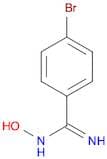
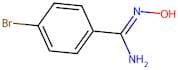
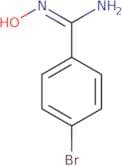
CAS 19227-14-6
:4-BROMO-N'-HYDROXYBENZENECARBOXIMIDAMIDE
- 4-Bromobenzamidoxime
- P-Bromobenzamidoxim,4-Bromo-N-Hydroxy-Benzamidine
- (E)-4-Bromo-N'-hydroxybenzimidamide
- P-Bromobenzamidoxime
- 2-Fluoro-6-Methyl-3-Nitro-Pyridine
(E)-4-Bromo-N'-hydroxybenzimidamide
CAS:Formula:C7H7BrN2OPurity:98%Color and Shape:SolidMolecular weight:215.04734-Bromobenzamidoxime
CAS:4-BromobenzamidoximeFormula:C7H7BrN2OPurity:≥95%Color and Shape: white solidMolecular weight:215.05g/mol(E)-4-Bromo-N'-hydroxybenzimidamide
CAS:(E)-4-Bromo-N'-hydroxybenzimidamide is a synthetic antifungal agent that is resistant to many microorganisms. It is a potent inhibitor of the uptake of β-amyloid peptide in rat cortical neurons and also inhibits the modification of β-amyloid. This drug has been shown to have pharmacological effects on bacterial cells, including inhibition of protein synthesis and DNA synthesis. The molecular basis for these interactions is not known, but it has been suggested that (E)-4-Bromo-N'-hydroxybenzimidamide interacts with the pharmacophore site on bacteria and binds to nitrogen atoms that are important for binding. These interactions are bioisosteric with oxadiazole derivatives such as clotrimazole, which have been shown to inhibit protein synthesis in fungi. The drug has also been used as a radiotracer to study the uptake of β-amyloid peptides by neurons
Formula:C7H7BrN2OPurity:Min. 95%Molecular weight:215.05 g/mol