CAS 1929-29-9
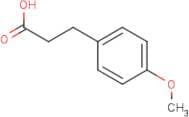
:3-(4-Methoxyphenyl)propionic acid
Description:
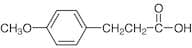
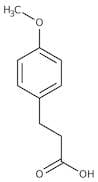
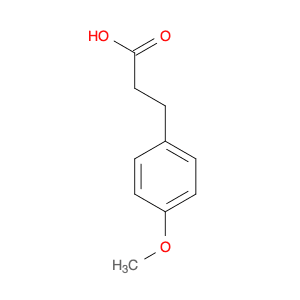
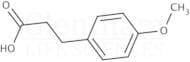
3-(4-Methoxyphenyl)propionic acid, with the CAS number 1929-29-9, is an organic compound characterized by its propionic acid backbone substituted with a 4-methoxyphenyl group. This compound typically appears as a white to off-white crystalline solid. It is soluble in organic solvents such as ethanol and methanol but has limited solubility in water. The presence of the methoxy group enhances its lipophilicity, which can influence its biological activity and interactions. The compound exhibits acidic properties due to the carboxylic acid functional group, allowing it to participate in various chemical reactions, including esterification and amidation. It may also exhibit potential pharmacological activities, making it of interest in medicinal chemistry. Additionally, its structural features suggest that it could engage in hydrogen bonding and π-π stacking interactions, which are relevant in biological systems. Overall, 3-(4-Methoxyphenyl)propionic acid is a versatile compound with applications in research and potential therapeutic uses.
Formula:C10H12O3
InChI:InChI=1S/C10H12O3/c1-13-9-5-2-8(3-6-9)4-7-10(11)12/h2-3,5-6H,4,7H2,1H3,(H,11,12)
InChI key:InChIKey=FIUFLISGGHNPSM-UHFFFAOYSA-N
SMILES:C(CC(O)=O)C1=CC=C(OC)C=C1
Synonyms:- 3-(2-Methoxyphenyl)Propanoic Acid
- 3-(4-Methoxyphenyl)Propanoate
- 3-(4-Methoxyphenyl)Propanoic Acid
- 3-(p-Methoxyphenyl)propanoic acid
- 3-(p-Methoxyphenyl)propionic acid
- 3-[4-(Methyloxy)phenyl]propanoic acid
- 4-Methoxybenzenepropanoic acid
- 4-Methoxyhydrocinnamic acid
- 4-Methoxyphenylpropiinic Acid
- Benzenepropanoic acid, 4-methoxy-
- Hydrocinnamic acid, p-methoxy-
- NSC 33134
- NSC 51509
- p-Methoxybenzenepropionic acid
- p-Methoxyhydrocinnamic acid
- See more synonyms
Sort by
Purity (%)
0
100
|
0
|
50
|
90
|
95
|
100
Found 8 products.
3-(4-Methoxyphenyl)propionic Acid
CAS:Formula:C10H12O3Purity:>98.0%(GC)(T)Color and Shape:White to Light yellow to Light orange powder to crystalMolecular weight:180.203-(4-Methoxyphenyl)propionic acid, 98%
CAS:This Thermo Scientific Chemicals brand product was originally part of the Alfa Aesar product portfolio. Some documentation and label information may refer to the legacy brand. The original Alfa Aesar product / item code or SKU reference has not changed as a part of the brand transition to Thermo SciFormula:C10H12O3Purity:98%Color and Shape:White to cream to brown, Crystalline powder or powderMolecular weight:180.20Benzenepropanoic acid, 4-methoxy-
CAS:Formula:C10H12O3Purity:97%Color and Shape:SolidMolecular weight:180.20053-(4-Methoxyphenyl)propanoic acid
CAS:3-(4-Methoxyphenyl)propanoic acidPurity:98%Molecular weight:180.20g/mol3-(4-Methoxyphenyl)propanoic acid
CAS:3-(4-Methoxyphenyl)propanoic acid is a useful organic compound for research related to life sciences.Formula:C10H12O3Color and Shape:SolidMolecular weight:180.2033-(4-Methoxyphenyl)propionic acid
CAS:3-(4-Methoxyphenyl)propionic acid is a nutrient solution that can be used to inhibit microbial growth by binding to the active site of enzymes such as carbonyl group, formation rate, acidic ph, chlorogenic acids, cinnamic acid derivatives. 3-(4-Methoxyphenyl)propionic acid has been shown to react with hydrogen bond and diltiazem hydrochloride in surface methodology experiments. This compound has also been shown to have activity against cavity microorganisms, including Streptococcus mutans and Lactobacillus acidophilus.
Formula:C10H12O3Purity:Min. 95%Color and Shape:PowderMolecular weight:180.2 g/mol3-(4-Methoxyphenyl)propionic acid
CAS:Formula:C10H12O3Purity:97%Color and Shape:SolidMolecular weight:180.203