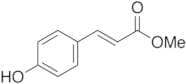
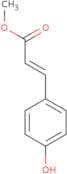
CAS 19367-38-5
:2-Propenoic acid, 3-(4-hydroxyphenyl)-, methyl ester, (E)-
Description:
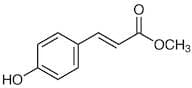
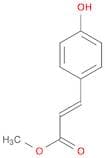
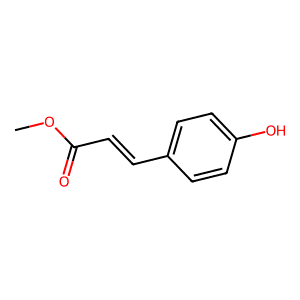
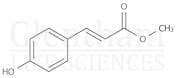
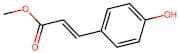
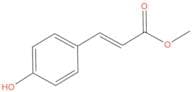
2-Propenoic acid, 3-(4-hydroxyphenyl)-, methyl ester, (E)-, commonly known as methyl 4-hydroxycinnamate, is an organic compound characterized by its ester functional group and a conjugated double bond system. This compound features a methoxy group attached to a phenolic structure, which contributes to its potential antioxidant properties. It is typically a colorless to pale yellow liquid with a pleasant aroma, making it useful in cosmetic and fragrance applications. The (E)- configuration indicates that the substituents around the double bond are on opposite sides, which can influence its reactivity and interactions with biological systems. Methyl 4-hydroxycinnamate is soluble in organic solvents and exhibits moderate solubility in water. Its chemical structure allows it to participate in various chemical reactions, including polymerization and esterification. Additionally, it has been studied for its potential health benefits, including anti-inflammatory and antimicrobial activities. As with many organic compounds, proper handling and safety precautions are essential due to its potential reactivity and effects.
Formula:C10H10O3
Synonyms:- methyl (2E)-3-(4-hydroxyphenyl)prop-2-enoate
- Methyl 4-hydroxyphenylacrylate
Sort by
Purity (%)
0
100
|
0
|
50
|
90
|
95
|
100
Found 12 products.
Methyl trans-p-Coumarate
CAS:Formula:C10H10O3Purity:>98.0%(GC)Color and Shape:White to Light yellow to Light orange powder to crystalMolecular weight:178.192-Propenoic acid, 3-(4-hydroxyphenyl)-, methyl ester, (2E)-
CAS:Formula:C10H10O3Purity:98%Color and Shape:SolidMolecular weight:178.1846(E)-Methyl 4-coumarate
CAS:(E)-Methyl 4-coumarate (OMpCA) is a predicted metabolite generated by BioTransformer1 that is produced by the metabolism of methyl 3-phenylprop-2-enoate.Formula:C10H10O3Purity:99.68% - 99.97%Color and Shape:White Crystal PowderMolecular weight:178.18Methyl 4-Hydroxy Cinnamate
CAS:Controlled ProductApplications Cinnamic acid derivative used in structure-antifungal activity relationship study against Aspergillus flavus, Aspergillus terreus, and Aspergillus niger. An antifungal agent.
References Bisagno, F., et al.: J. Agric. Food Chem., 55, 10645 (2007),Formula:C10H10O3Color and Shape:NeatMolecular weight:178.18Methyl 4-hydroxycinnamate
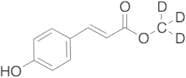
CAS:Methyl 4-hydroxycinnamate is a protocatechuic acid that can be produced by the reaction of hydrochloric acid and b16 mouse melanoma. This chemical has been shown to have an anti-inflammatory effect in rats with inflammatory bowel disease. Methyl 4-hydroxycinnamate is also a natural compound found in plants, such as celery, cinnamon, and apples. The mechanism of this chemical's action is unknown but it has been shown to inhibit the activity of rat liver microsomes. It is theorized that methyl 4-hydroxycinnamate may inhibit the production of proinflammatory substances by altering the membrane composition or activity of enzymes.br>br> br>br> Methyl 4-hydoxycinnamate may be synthesized from anhydrous sodium acetate and an acid complex in a model system using reaction solution. The product is then purified using column chromatography before being reacted with methylamine and sulfurFormula:C10H10O3Purity:Min. 95%Color and Shape:PowderMolecular weight:178.18 g/mol(Methyl-d3) 4-Hydroxy Cinnamate
CAS:Controlled ProductFormula:C10D3H7O3Color and Shape:NeatMolecular weight:181.203