CAS 19419-09-1
:4-Cinnolinol, 3-bromo-
Description:
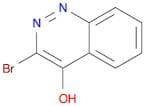
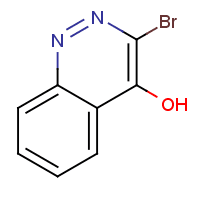
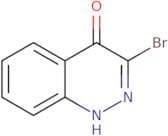
4-Cinnolinol, 3-bromo- is an organic compound characterized by its cinnolinol structure, which features a fused bicyclic system containing both a pyridine and a pyrazole ring. The presence of a bromine atom at the 3-position of the cinnolinol framework introduces notable reactivity and influences its chemical properties. This compound typically exhibits a pale yellow to brownish appearance and is soluble in organic solvents. It may participate in various chemical reactions, including nucleophilic substitutions and electrophilic aromatic substitutions, due to the presence of the bromine atom. Additionally, 4-Cinnolinol, 3-bromo- may display biological activity, making it of interest in medicinal chemistry and drug development. Its derivatives can be explored for potential applications in pharmaceuticals, agrochemicals, and materials science. As with many brominated compounds, safety precautions should be observed due to potential toxicity and environmental impact. Overall, 4-Cinnolinol, 3-bromo- is a compound of interest for further research in both synthetic and applied chemistry contexts.
Formula:C8H5BrN2O
Synonyms:- 3-broMo-4-Cinnolinol
- 3-BroMo-4-hydroxycinnoline
- 4-Cinnolinol, 3-bromo-
- 3-BroMocinnolin-4-ol
Sort by
Purity (%)
0
100
|
0
|
50
|
90
|
95
|
100
Found 3 products.
3-bromo-4-hydroxycinnoline
CAS:Formula:C8H5BrN2OPurity:95%Color and Shape:SolidMolecular weight:225.04213-Bromocinnolin-4-ol
CAS:3-Bromocinnolin-4-olFormula:C8H5BrN2OPurity:>97%Color and Shape: light brown to brown solidMolecular weight:225.04g/mol3-Bromocinnolin-4-ol
CAS:3-Bromocinnolin-4-ol is a nitrogenous and reactive chemical that can form dimers and triazines. It is a heteroaromatic with perfluoroalkyl substituents. 3-Bromocinnolin-4-ol has been shown to undergo photolysis, polymerization, and pyrolysis. The chemical has the ability to fluorinate other compounds by electron transfer. 3-Bromocinnolin-4-ol can also react with heteroaromatics to form polymers. This chemical is used as a reagent in organic synthesis due to its reactive nature.Formula:C8H5BrN2OPurity:Min. 95%Molecular weight:225.05 g/mol