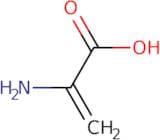
CAS 1948-56-7
:dehydroalanine
Description:
Dehydroalanine is an amino acid derivative characterized by the absence of a hydrogen atom at the alpha carbon, resulting in a double bond between the alpha and beta carbons. This structural modification gives dehydroalanine unique properties compared to standard amino acids. It is a non-proteinogenic amino acid, meaning it is not incorporated into proteins during translation but can be found in certain peptides and natural products. Dehydroalanine is known for its reactivity, particularly in forming covalent bonds with nucleophiles, which can lead to the formation of various bioactive compounds. Its presence in peptides can influence the stability and biological activity of these molecules. Additionally, dehydroalanine can participate in various chemical reactions, including Michael additions and cycloadditions, making it a valuable building block in synthetic organic chemistry. The compound is typically studied in the context of peptide synthesis and the development of novel therapeutics, particularly due to its potential role in modifying protein function and interactions.
Formula:C3H5NO2
InChI:InChI=1S/C3H5NO2/c1-2(4)3(5)6/h1,4H2,(H,5,6)
InChI key:InChIKey=UQBOJOOOTLPNST-UHFFFAOYSA-N
SMILES:C(C(O)=O)(=C)N
Synonyms:- 2,3-Didehydroalanine
- 2-Amino-2-propenoic acid
- 2-Aminoprop-2-Enoic Acid
- 2-Propenoic acid, 2-amino-
- Acrylic acid, 2-amino-
- Alanine, dehydro-
- Aminoacrylic acid
- Dehydro-<span class="text-smallcaps">L</span>-alanine
- alpha,beta-Dehydroalanine
- alpha-Aminoacrylate
- α,β-Didehydroalanine
- α-Aminoacrylic acid
- See more synonyms
Sort by
Purity (%)
0
100
|
0
|
50
|
90
|
95
|
100
Found 1 products.
Aminoacrylic acid
CAS:<p>Aminoacrylic acid is an anticancer agent that inhibits the growth of tumors by blocking the action of certain proteins. It has been shown to be effective against leukemia and other types of cancer cells. Aminoacrylic acid is a medicinal compound that acts as a kinase inhibitor, which prevents the activation of cancer cell growth pathways. This compound induces apoptosis or programmed cell death, which leads to the elimination of cancer cells from the body. It has been isolated from Chinese urine and has been extensively studied for its potential therapeutic applications in cancer treatment. Aminoacrylic acid disrupts the cell cycle and has been shown to be a promising candidate for future chemotherapy research.</p>Formula:C3H5NO2Purity:Min. 95%Molecular weight:87.08 g/mol