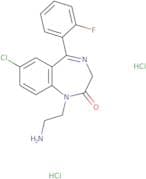
CAS 19603-97-5
:Didesethyl flurazepam dihydrochloride
Description:
Didesethyl flurazepam dihydrochloride is a chemical compound that belongs to the benzodiazepine class of medications, which are primarily used for their sedative and anxiolytic properties. It is a derivative of flurazepam, characterized by the absence of two ethyl groups in its structure, hence the prefix "didesethyl." This compound exhibits pharmacological effects such as muscle relaxation, sedation, and anxiolysis, making it relevant in the treatment of anxiety disorders and sleep disturbances. Didesethyl flurazepam dihydrochloride is typically administered in its hydrochloride salt form, which enhances its solubility in water, facilitating its use in pharmaceutical formulations. The compound acts on the central nervous system by modulating the activity of gamma-aminobutyric acid (GABA) receptors, leading to increased inhibitory neurotransmission. While it has therapeutic applications, it is also associated with potential side effects, including sedation, dizziness, and dependence, necessitating careful monitoring during use. As with all benzodiazepines, it is important to consider the risk of tolerance and withdrawal symptoms with prolonged use.
Formula:C17H17Cl3FN3O
Synonyms:- didesethylflurazepam
- Didesethyl flurazepam
- CS-154
- dihydrochloride
- 1-(2-Aminoethyl)-7-chloro-5-(2-fluorophenyl)-1,3-dihydro-2H-1,4-benzodiazepin-2-one dihydrochloride
- Ro 7-1986
Sort by
Purity (%)
0
100
|
0
|
50
|
90
|
95
|
100
Found 1 products.
Didesethylflurazepam dihydrochloride
CAS:Controlled ProductDidesethylflurazepam dihydrochloride (DFZD) is a drug that belongs to the benzodiazepine class and has no significant therapeutic use. DFZD is an active metabolite of lorazepam, but its pharmacokinetics are not well understood. It is relatively stable in urine samples and may be used as a marker to determine the time of last intake for other drugs such as triazolam. DFZD may bind to receptors in the brain and interfere with the effects of GABA, which can lead to a number of side effects including depression, memory loss, and sleep disturbances. The traditional analytical method for DFZD is LC-MS/MS using an acidic mobile phase. A more recent analytical method using fluorescence detection is also available. DFZD has been shown to have similar clinical properties to lorazepam, including sedation and relief from anxiety or insomnia.Formula:C17H15ClFN3O•(HCl)2Purity:Min. 95%Molecular weight:404.69 g/mol