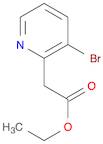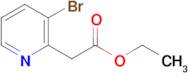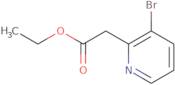
CAS 197376-41-3
:Ethyl 2-(3-bromopyridin-2-yl)acetate
Description:
Ethyl 2-(3-bromopyridin-2-yl)acetate is an organic compound characterized by its ester functional group, which is derived from acetic acid and ethanol. The presence of a bromine atom on the pyridine ring introduces notable reactivity and influences the compound's physical and chemical properties. This compound typically appears as a colorless to pale yellow liquid with a distinctive odor. It is soluble in organic solvents such as ethanol and dichloromethane but has limited solubility in water due to its hydrophobic ethyl group. The bromopyridine moiety can participate in various chemical reactions, making this compound useful in synthetic organic chemistry, particularly in the development of pharmaceuticals and agrochemicals. Its molecular structure allows for potential applications in medicinal chemistry, where the bromine substituent can enhance biological activity or facilitate further chemical modifications. As with many organic compounds, safety precautions should be observed when handling this substance, as it may pose health risks if ingested or inhaled.
Formula:C9H10BrNO2
InChI:InChI=1S/C9H10BrNO2/c1-2-13-9(12)6-8-7(10)4-3-5-11-8/h3-5H,2,6H2,1H3
InChI key:QRYDVMPGEGDIGJ-UHFFFAOYSA-N
SMILES:CCOC(=O)CC1=C(C=CC=N1)Br
Filter by
Purity percentage
0
100
|
0
|
50
|
90
|
95
|
100
Found 5 products.
- Lower prices
- Higher prices
- Lower purities
- Higher purities
- Faster estimated delivery
Ethyl 2-(3-bromopyridin-2-yl)acetate
CAS:Ethyl 2-(3-bromopyridin-2-yl)acetateFormula:C9H10BrNO2Purity:99%Molecular weight:244.092-Pyridineacetic acid, 3-bromo-, ethyl ester
CAS:Formula:C9H10BrNO2Purity:98%Color and Shape:LiquidMolecular weight:244.0852Ethyl 2-(3-Bromo-2-pyridyl)acetate
CAS:Ethyl 2-(3-Bromo-2-pyridyl)acetateFormula:C9H10BrNO2Purity:98%Molecular weight:244.09Ethyl 2-(3-bromopyridin-2-yl)acetate
CAS:Formula:C9H10BrNO2Purity:98%Color and Shape:LiquidMolecular weight:244.088Ethyl 2-(3-bromopyridin-2-yl)acetate
CAS:Ethyl 2-(3-bromopyridin-2-yl)acetate is a synthetic compound that has been used in the treatment of cancer. It has been shown to be effective against colon cancer and cancer cell lines. Ethyl 2-(3-bromopyridin-2-yl)acetate binds to DNA and inhibits the activity of topoisomerase II, which is an enzyme that maintains the integrity of DNA. This inhibition leads to disruption of DNA synthesis and replication, leading to cell death. The antitumour activity of this compound is due to its ability to create reactive oxygen species (ROS), which lead to oxidative stress in cells.Formula:C9H10BrNO2Purity:Min. 95%Molecular weight:244.09 g/mol