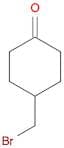
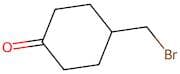
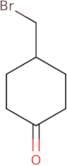
CAS 197387-33-0
:Cyclohexanone, 4-(bromomethyl)-
- 4-(bromomethyl)cyclohexanone
- Cyclohexanone, 4-(bromomethyl)-
- 4-(bromomethyl)cyclohexan-1-one
Cyclohexanone, 4-(bromomethyl)-
CAS:Formula:C7H11BrOPurity:96%Color and Shape:SolidMolecular weight:191.06564-(Bromomethyl)cyclohexan-1-one
CAS:4-(Bromomethyl)cyclohexan-1-onePurity:96%Molecular weight:191.07g/mol4-(Bromomethyl)cyclohexan-1-one
CAS:The bis-Grignard reagent, also known as a bifunctional organometallic compound, is an organic chemistry reactive intermediate used in the synthesis of diverse organic molecules. This type of reagent is prepared by the reaction of a magnesium halide with an alkyl or aryl halide. The Grignard reagent reacts with electrophiles to form carbon-carbon bonds. The catellani reaction is an example of this type of reaction. A new method for the efficient synthesis of 4-(bromomethyl)cyclohexan-1-one has been developed using a cross-coupling strategy and a phosphine ligand. This process begins with the formation of a palladium catalyst via oxidative addition, followed by nucleophilic displacement with methyl iodide to give 4-(bromomethyl)cyclohexan-1-one in high yield and excellent purity.
Formula:C7H11BrOPurity:Min. 95%Molecular weight:191.07 g/mol