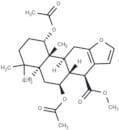
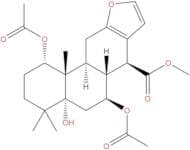
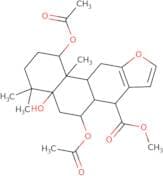
CAS 197781-86-5
:7-O-Acetylbonducellpin C
Description:
7-O-Acetylbonducellpin C is a chemical compound that belongs to the class of natural products known as alkaloids, specifically derived from the Bonducella genus of plants. This compound is characterized by its complex molecular structure, which includes multiple functional groups that contribute to its biological activity. It typically exhibits a range of pharmacological properties, including potential anti-inflammatory and analgesic effects, making it of interest in medicinal chemistry. The presence of the acetyl group enhances its solubility and bioavailability, which can influence its therapeutic efficacy. Additionally, 7-O-Acetylbonducellpin C may interact with various biological targets, leading to diverse physiological effects. Its specific mechanisms of action and potential applications in drug development are subjects of ongoing research. As with many natural products, the extraction and purification processes can be challenging, and the compound's stability under different conditions is an important consideration for its use in research and potential therapeutic applications.
Formula:C25H34O8
Synonyms:- methyl (1S,4aR,6S,6aR,7S,11aS,11bS)-1,6-diacetyloxy-4a-hydroxy-4,4,11b-trimethyl-2,3,5,6,6a,7,11,11a-octahydro-1H-naphtho[2,1-f][1]benzofuran-7-carboxylate
- Bonducellpin C acetate
- Phenanthro[3,2-b]furan-7-carboxylic acid, 1,6-bis(acetyloxy)-1,2,3,4,4a,5,6,6a,7,11,11a,11b-dodecahydro-4a-hydroxy-4,4,11b-trimethyl-, methyl ester, (1S,4aR,6S,6aR,7S,11aS,11bS)-
- 7-O-Acetylbonducellpin C
Sort by
Purity (%)
0
100
|
0
|
50
|
90
|
95
|
100
Found 3 products.
7-O-Acetylbonducellpin C
CAS:7-O-Acetylbonducellpin C may exhibit significant inhibition of nitric oxide production of RAW264.7 macrophages stimulated by lipopolysaccharide (LPS).Formula:C25H34O8Purity:98%Color and Shape:SolidMolecular weight:462.5397-o-Acetylbonducellpin C
CAS:7-o-Acetylbonducellpin C is a naturally occurring flavonoid compound, which is derived from the seeds of Caesalpinia bonduc, a member of the Fabaceae family. This plant is widely found in tropical and subtropical regions and has been traditionally used in various medicinal practices. The compound exerts its effects primarily through its bioactive properties, which include antioxidant and anti-inflammatory mechanisms. These mechanisms involve the inhibition of pro-inflammatory mediators and free radical scavenging, contributing to the reduction of oxidative stress and inflammatory responses in biological systems.
Formula:C25H34O8Purity:Min. 95%Molecular weight:462.5 g/mol