CAS 1983-60-4
:4,4′-Bipyridinium, 1,1′-dimethyl-, iodide (1:2)
Description:
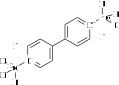
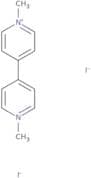
4,4′-Bipyridinium, 1,1′-dimethyl-, iodide (1:2), commonly referred to as methyl viologen, is a quaternary ammonium compound characterized by its bipyridinium structure. It features two pyridine rings connected by a single bond, with two methyl groups attached to the nitrogen atoms of the pyridinium moieties. This compound is typically encountered as a salt, with iodide ions serving as counterions. Methyl viologen is known for its bright blue color in solution and exhibits strong electrochemical properties, making it useful in various applications, including as a redox mediator in electrochemical systems and as a herbicide. It is also recognized for its ability to undergo reversible redox reactions, which can lead to the formation of radical species. However, it is important to note that methyl viologen is toxic and can pose health risks upon exposure, necessitating careful handling and appropriate safety measures in laboratory and industrial settings. Its solubility in water and organic solvents further enhances its utility in chemical processes.
Formula:C12H14N2·2I
InChI:InChI=1S/C12H14N2.2HI/c1-13-7-3-11(4-8-13)12-5-9-14(2)10-6-12;;/h3-10H,1-2H3;2*1H/q+2;;/p-2
InChI key:InChIKey=JZLZVBMQJMQNJU-UHFFFAOYSA-L
SMILES:C[N+]=1C=CC(=CC1)C=2C=C[N+](C)=CC2.[I-]
Synonyms:- 4,4'-Bipyridinium, 1,1'-dimethyl-, diiodide
- 4,4'-Dipyridyl dimethiodide
- 4,4′-Bipyridinium, 1,1′-dimethyl-, iodide (1:2)
- Methyl viologen diiodide
- Methylviologen diiodide
- N,N′-Dimethyl-4,4′-bipyridinium diiodide
- Nichino gramaxone
- Paraquat diiodide
- 1,1′-Dimethyl-4,4′-bipyridinium diiodide
Sort by
Purity (%)
0
100
|
0
|
50
|
90
|
95
|
100
Found 3 products.
1,1'-dimethyl-[4,4'-bipyridine]-1,1'-diium diiodide
CAS:Formula:C12H14I2N2Purity:98%Molecular weight:440.06191,1'-Dimethyl-4,4'-bipyridinium diiodide
CAS:1,1'-Dimethyl-4,4'-bipyridinium diiodide (DMBI) is a hydrophobic compound that is soluble in organic solvents. It has been validated as a new optical probe for the detection of hydrogen peroxide by spectroscopic techniques. DMBI reacts with hydrogen peroxide to form an excited state molecule (a radical species) which produces a photocurrent when irradiated with light. The wavelength of the photogenerated current can be used to determine the concentration of hydrogen peroxide present. DMBI can also be used to detect hydrophilic compounds such as urea or creatinine. The reduction products formed by the reaction with these compounds are more hydrophilic and can be detected by this technique.Formula:C12H14N2·I2Purity:Min. 95%Color and Shape:PowderMolecular weight:440.06 g/mol
![1,1'-dimethyl-[4,4'-bipyridine]-1,1'-diium diiodide](/_next/image/?url=https%3A%2Fstatic.cymitquimica.com%2Fproducts%2FIN%2Fthumb%2FDA002BG3.jpg&w=3840&q=75)