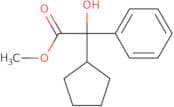
CAS 19833-96-6
:Methyl α-cyclopentyl-α-hydroxybenzeneacetate
Description:
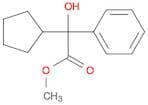
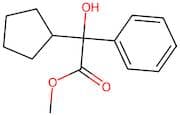
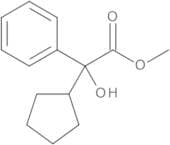
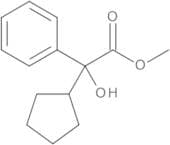
Methyl α-cyclopentyl-α-hydroxybenzeneacetate, identified by its CAS number 19833-96-6, is an organic compound that belongs to the class of esters. This substance features a cyclopentyl group and a hydroxybenzene moiety, which contribute to its unique chemical properties. The presence of the ester functional group indicates that it can undergo hydrolysis, making it reactive in various chemical environments. Typically, compounds like this may exhibit moderate to low solubility in water, while being more soluble in organic solvents due to their hydrophobic characteristics. The hydroxy group can participate in hydrogen bonding, influencing its physical properties such as boiling and melting points. Additionally, the compound may possess biological activity, which could be of interest in pharmaceutical or agrochemical applications. Its structural features suggest potential uses in synthesis or as an intermediate in organic reactions. However, specific safety and handling guidelines should be followed, as with all chemical substances, to ensure safe usage in laboratory or industrial settings.
Formula:C14H18O3
InChI:InChI=1S/C14H18O3/c1-17-13(15)14(16,12-9-5-6-10-12)11-7-3-2-4-8-11/h2-4,7-8,12,16H,5-6,9-10H2,1H3
InChI key:InChIKey=FGMUSNHTKNGVQD-UHFFFAOYSA-N
SMILES:C(C(OC)=O)(O)(C1CCCC1)C2=CC=CC=C2
Synonyms:- Benzeneacetic Acid, Alpha-Cyclopentyl-Alpha-Hydroxy-, Methyl Ester
- Benzeneacetic acid, α-cyclopentyl-α-hydroxy-, methyl ester
- Mandelic acid, α-cyclopentyl-, methyl ester
- Methyl (±)-cyclopentylmandelate
- Methyl cyclopentyl(hydroxy)phenylacetate
- Methyl α-cyclopentyl-α-hydroxybenzeneacetate
- Methyl α-cyclopentylmandelate
- Methyl-2-Cyclopentyl-2-Hydroxy-2-Phenylacetate
- Methylcyclopentyl(hydroxy)phenylacetat
- NSC 93811
- Methyl cyclopentylphenylglycolate
Sort by
Purity (%)
0
100
|
0
|
50
|
90
|
95
|
100
Found 9 products.
Glycopyrrolate Related Compound L (Methyl 2-cyclopentyl-2-hydroxy-2-phenylacetate)
CAS:Carboxylic acids w/ alcohol function but w/o other oxygen function and their derivatives, nesoiFormula:C14H18O3Color and Shape:Translucent Light Yellow Liquid ViscousMolecular weight:234.12559Benzeneacetic acid, α-cyclopentyl-α-hydroxy-, methyl ester
CAS:Formula:C14H18O3Purity:98%Color and Shape:LiquidMolecular weight:234.2909Methyl cyclopentylphenylglycolate
CAS:Methyl cyclopentylphenylglycolatePurity:98%Molecular weight:234.29g/molGlycopyrronium Bromide EP Impurity L (Glycopyrrolate USP Related Compound L)
CAS:Formula:C14H18O3Color and Shape:Colorless LiquidMolecular weight:234.30Methyl alpha-Cyclopentylmandelate
CAS:Controlled ProductFormula:C14H18O3Color and Shape:NeatMolecular weight:234.29Methyl 2-cyclopentyl-2-hydroxyphenylacetate
CAS:Formula:C14H18O3Purity:98%Color and Shape:LiquidMolecular weight:234.295Methyl cyclopentylphenylglycolate
CAS:Methyl cyclopentylphenylglycolate is a synthetic drug that is used in the treatment of bladder disorders. It has been shown to be effective in treating overactive bladder, as well as neurogenic and idiopathic detrusor instability. Methyl cyclopentylphenylglycolate is an anticholinergic drug and works by blocking acetylcholine receptors in the bladder wall. It also decreases the amount of urine produced, which may be due to its ability to inhibit sodium ion channels. This chemical has been studied extensively for its potential use in the treatment of prostate cancer and Alzheimer's disease.
Formula:C14H18O3Purity:Min. 95%Color and Shape:Clear Colourless To Yellow LiquidMolecular weight:234.29 g/mol