CAS 19835-38-2
:1-adamantaneacetyl chloride
Description:
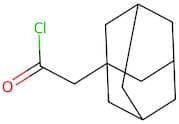
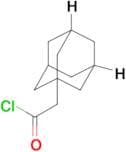
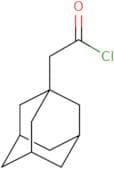
1-Adamantaneacetyl chloride, with the CAS number 19835-38-2, is an acyl chloride derivative of adamantane, a polycyclic hydrocarbon known for its unique cage-like structure. This compound features an acetyl group (-COCH3) attached to the adamantane framework, which contributes to its reactivity and utility in organic synthesis. As an acyl chloride, it is characterized by its ability to undergo nucleophilic acyl substitution reactions, making it a valuable intermediate in the synthesis of various organic compounds, including pharmaceuticals and agrochemicals. The presence of the adamantane structure imparts notable stability and steric hindrance, influencing its reactivity profile. Typically, 1-adamantaneacetyl chloride is a colorless to pale yellow liquid or solid, depending on temperature and purity, and it is known to be corrosive and reactive with water, releasing hydrochloric acid upon hydrolysis. Proper handling and storage in a controlled environment are essential due to its potential hazards.
Formula:C12H17ClO
InChI:InChI=1/C12H17ClO/c13-11(14)7-12-4-8-1-9(5-12)3-10(2-8)6-12/h8-10H,1-7H2
SMILES:C1C2CC3CC1CC(C2)(C3)CC(=O)Cl
Synonyms:- 1-Adamantylacetyl Chloride
- 2-(1-Adamantyl)Ethanoyl Chloride
- Adamantan-1-Yl-Acetyl Chloride
- Akos Bc-0495
- Tricyclo[3.3.1.1~3,7~]Dec-1-Ylacetyl Chloride
Sort by
Purity (%)
0
100
|
0
|
50
|
90
|
95
|
100
Found 4 products.
Tricyclo[3.3.1.13,7]decane-1-acetyl chloride
CAS:Formula:C12H17ClOPurity:95%Color and Shape:LiquidMolecular weight:212.71581-ADAMANTANEACETYL CHLORIDE
CAS:Purity:95.0%Color and Shape:LiquidMolecular weight:212.720001220703121-Adamantylacetyl chloride
CAS:1-Adamantylacetyl chloride is a hydroxylamine that can be used in medicinal chemistry as a synthon for enamines. It is also a potential target for pharmaceutical research due to its ability to form cyclic chlorides. 1-Adamantylacetyl chloride can be synthesized from malonate and anhydrous hydrochloric acid, with the addition of an appropriate chloride such as trifluoromethyl or bromomethyl. The resulting product can be used to produce ketones by reacting with acetone or methyl ethyl ketone.Formula:C12H17ClOPurity:Min. 95%Color and Shape:PowderMolecular weight:212.72 g/mol
![Tricyclo[3.3.1.13,7]decane-1-acetyl chloride](/_next/image/?url=https%3A%2Fstatic.cymitquimica.com%2Fproducts%2FIN%2Fthumb%2FDA002BGN.jpg&w=3840&q=75)