CAS 1991-52-2
:2,5-Di-tert-butyl-4-methoxyphenol
Description:
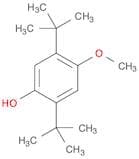
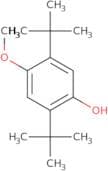
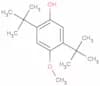
2,5-Di-tert-butyl-4-methoxyphenol, commonly referred to as BHT (butylated hydroxytoluene), is an organic compound characterized by its phenolic structure. It features two tert-butyl groups and a methoxy group attached to a benzene ring, which contribute to its stability and antioxidant properties. This compound is primarily used as a food preservative and antioxidant in various industrial applications, including cosmetics and plastics, due to its ability to inhibit the oxidation of lipids and other substances. BHT is a white to light yellow crystalline solid that is relatively soluble in organic solvents but has limited solubility in water. It exhibits a melting point that varies depending on purity and form. The compound is known for its low toxicity, although some studies have raised concerns regarding its potential effects on health and the environment. Overall, 2,5-Di-tert-butyl-4-methoxyphenol is valued for its effectiveness in prolonging the shelf life of products by preventing oxidative degradation.
Formula:C15H24O2
InChI:InChI=1S/C15H24O2/c1-14(2,3)10-9-13(17-7)11(8-12(10)16)15(4,5)6/h8-9,16H,1-7H3
InChI key:InChIKey=FLLRQABPKFCXSO-UHFFFAOYSA-N
SMILES:C(C)(C)(C)C1=C(OC)C=C(C(C)(C)C)C(O)=C1
Synonyms:- 2,5-Bis(1,1-dimethylethyl)-4-methoxyphenol
- 2,5-Di-tert-butyl-4-methoxyphenol
- Phenol, 2,5-bis(1,1-dimethylethyl)-4-methoxy-
- Phenol, 2,5-di-tert-butyl-4-methoxy-
- 2,5-Di-tert-butyl-4-hydroxyanisole
Sort by
Purity (%)
0
100
|
0
|
50
|
90
|
95
|
100
Found 3 products.
Phenol, 2,5-bis(1,1-dimethylethyl)-4-methoxy-
CAS:Formula:C15H24O2Purity:97%Molecular weight:236.34992,5-Di-tert-butyl-4-methoxyphenol
CAS:<p>2,5-Di-tert-butyl-4-methoxyphenol is a persulfate reductant that has been shown to have peroxidase-like activity. This compound also has been shown to induce lung toxicity in animals, as well as exhibiting tumorigenicity. 2,5-Di-tert-butyl-4-methoxyphenol is an industrial chemical that is used as a catalyst in the production of polymers and dyes. It is also used in the manufacture of herbicides, plastics, and pharmaceuticals. This compound reacts with a number of oxidizing agents to form reactive radicals such as hydroxyl radicals and hydrogen peroxide. These radicals can then react with other substances present in the environment to produce toxic byproducts such as trifluoromethanesulfonic acid (TFMS). The redox potential for this compound is -0.8 V vs NHE at pH 7.</p>Formula:C15H24O2Purity:Min. 95%Color and Shape:PowderMolecular weight:236.35 g/mol