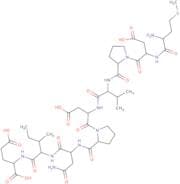
CAS 200203-20-9
:HIV-1 tat Protein (1-9)
Description:
HIV-1 Tat Protein (1-9) is a peptide derived from the transactivator of transcription (Tat) protein of the Human Immunodeficiency Virus type 1 (HIV-1). This peptide is significant in the context of HIV research due to its role in enhancing viral gene expression and promoting the replication of the virus. The sequence typically consists of nine amino acids, which are crucial for its function in cellular processes. The Tat protein interacts with the host's transcription machinery, facilitating the transcription of viral RNA. Its characteristics include being a small, positively charged peptide, which allows it to penetrate cell membranes and exert its effects intracellularly. The CAS number 200203-20-9 uniquely identifies this specific peptide in chemical databases, aiding in its study and application in research, particularly in understanding HIV pathogenesis and developing potential therapeutic strategies. Overall, HIV-1 Tat Protein (1-9) serves as an important tool in molecular biology and virology, contributing to the understanding of HIV's mechanisms of action.
Formula:C43H68N10O17S
Synonyms:- H-Met-Asp-Pro-Val-Asp-Pro-Asn-Ile-Glu-OH
Sort by
Purity (%)
0
100
|
0
|
50
|
90
|
95
|
100
Found 1 products.
HIV-1 tat Protein (1-9)
CAS:Tat is a protein from the human immunodeficiency virus type 1 (HIV-1) that is responsible for the regulation of viral gene expression. Tat binds to a cellular receptor, CD4, and enters the cell. The Tat protein forms a ternary complex with transcription factors and RNA polymerase II. This complex then binds to promoter regions of HIV genes and initiates transcription. Tat has been postulated to modulate immune functions such as chemokine production, T-cell activation, and macrophage activation. The HIV-1 tat Protein (1-9) H-Met-Asp-Pro-Val-Asp-Pro-Asn-Ile-Glu-OH has been shown to have an effect on the immune system by affecting chemokines and other immune functions.Formula:C43H68N10O17SPurity:Min. 95%Molecular weight:1,029.12 g/mol