


CAS 2003234-63-5
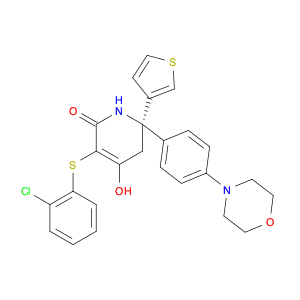
:GNE140
Description:
As of my last update in October 2023, there is limited publicly available information regarding the chemical substance known as GNE140, with the CAS number 2003234-63-5. GNE140 is a small molecule that has been investigated primarily in the context of pharmaceutical research, particularly for its potential therapeutic applications. It is known to act as a selective inhibitor, which may target specific biological pathways or receptors, making it of interest in drug development. The substance's chemical structure, solubility, stability, and specific biological activity would typically be characterized through various analytical techniques, including spectroscopy and chromatography. However, detailed data on its physical and chemical properties, such as melting point, boiling point, and toxicity, may not be widely published or may be proprietary to the developing organization. For comprehensive and specific information, consulting scientific literature or databases that focus on drug development and chemical safety would be advisable.
Formula:C25H23ClN2O3S2
Synonyms:- GNE-140;GNE 140;GNE140
- CS-2624
- 2(1H)-Pyridinone, 3-[(2-chlorophenyl)thio]-5,6-dihydro-4-hydroxy-6-[4-(4-morpholinyl)phenyl]-6-(3-thienyl)-, (6R)-
- GNE140
- (R)-GNE-140
- (R)-3-((2-chlorophenyl)thio)-4-hydroxy-6-(4-morpholinophenyl)-6-(thiophen-3-yl)-5,6-dihydropyridin-2(1H)-one
- (GNE-140
Sort by
Purity (%)
0
100
|
0
|
50
|
90
|
95
|
100
Found 6 products.
(R)-GNE-140
CAS:(R)-GNE-140 (GNE-140) is an effective LDHA/LDHB inhibitor (IC50s: 3/5 nM) and is 18-fold more potent than S enantiomer.Formula:C25H23ClN2O3S2Purity:98.25% - 98.91%Color and Shape:SolidMolecular weight:499.04(R)-GNE-140
CAS:(R)-GNE-140 is a potential cancer treatment that inhibits the metabolic reprogramming of cancer cells. It has been shown to inhibit the aerobic glycolysis of cancer cells and induce anaerobic glycolysis, which is less efficient in generating ATP. This drug inhibits the activity of the enzyme aldolase A, which converts glyceraldehyde-3-phosphate into dihydroxyacetone phosphate. This inhibition leads to decreased ATP production and increased lactate production, providing a possible therapeutic strategy for treating cancers.
Formula:C25H23ClN2O3S2Purity:Min. 95%Color and Shape:PowderMolecular weight:499.04 g/mol(6R)-3-[(2-chlorophenyl)sulfanyl]-6-[4-(morpholin-4-yl)phenyl]-6-(thiophen-3-yl)piperidine-2,4-dione
CAS:Purity:98%Molecular weight:499.0400085





![(6R)-3-[(2-chlorophenyl)sulfanyl]-6-[4-(morpholin-4-yl)phenyl]-6-(thiophen-3-yl)piperidine-2,4-dio…](/_next/image/?url=https%3A%2Fstatic.cymitquimica.com%2Fproducts%2F10%2Fthumb%2FF867129.jpg&w=3840&q=75)
