CAS 20041-90-1
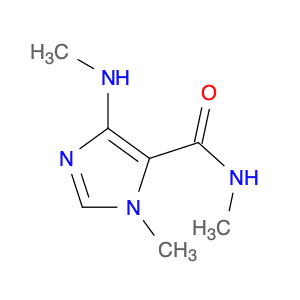
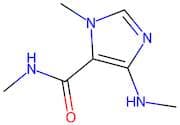
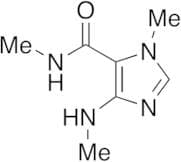
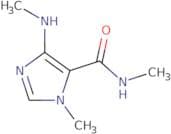
:N,1-dimethyl-4-(methylamino)-1H-imidazole-5-carboxamide
Description:
N,1-dimethyl-4-(methylamino)-1H-imidazole-5-carboxamide, with the CAS number 20041-90-1, is a chemical compound that belongs to the class of imidazole derivatives. This substance features a five-membered aromatic ring containing two nitrogen atoms, which contributes to its basicity and potential biological activity. The presence of both dimethyl and methylamino groups enhances its lipophilicity, potentially influencing its solubility and permeability in biological systems. The carboxamide functional group indicates that it can participate in hydrogen bonding, which may affect its interactions with biological targets. This compound may exhibit pharmacological properties, making it of interest in medicinal chemistry and drug development. Its structural characteristics suggest potential applications in various fields, including pharmaceuticals, where it could serve as a lead compound for further modifications to enhance efficacy and selectivity. As with many chemical substances, understanding its properties, reactivity, and biological interactions is crucial for its application in research and industry.
Formula:C7H12N4O
InChI:InChI=1/C7H12N4O/c1-8-6-5(7(12)9-2)11(3)4-10-6/h4,8H,1-3H3,(H,9,12)
SMILES:CNc1c(C(=NC)O)n(C)cn1
Synonyms:- 1H-Imidazole-5-carboxamide, N,1-dimethyl-4-(methylamino)-
Sort by
Purity (%)
0
100
|
0
|
50
|
90
|
95
|
100
Found 6 products.
N,1-Dimethyl-4-(methylamino)-1H-imidazole-5-carboxamide
CAS:N,1-Dimethyl-4-(methylamino)-1H-imidazole-5-carboxamidePurity:95%Molecular weight:168.2g/molCaffeidine
CAS:Applications Caffeidine is an impurity of Caffeine (C080100), a xanthine alkaloid that acts as a stimulant drug and a reversible acetylcholinesterase inhibitor. Caffeidine have also shown inhibitory activity towards cyclic nucleotide phosphodiesterases.
References Buchman, R., et al.: J. Medn. Chem., 17, 1168 (1974); Zubair, U.M., et al.: Anal. Profiles Drug Subs., 15, 71 (1986); Cherrah, Y., et al.: Biochem. Pharmacol., 37, 1311 (1988);Formula:C7H12N4OColor and Shape:NeatMolecular weight:168.2Caffeidine
CAS:Caffeine is a stimulant that is found in coffee, tea, and some soft drinks. It can also be used to treat certain medical conditions. Caffeine is a reactive molecule that binds to human serum proteins and has been shown to have chronic oral toxicity in rats. The methylation of caffeine leads to the formation of 1-methylxanthine, which has been shown to cause cancer in animal models when given chronically. Caffeine's carcinogenic effects are due to its ability to induce DNA mutations by reacting with oxygen radicals and oxidizing DNA bases as well as inhibiting DNA repair enzymes. Caffeine's chemical diversity makes it difficult for researchers to study its carcinogenicity.Formula:C7H12N4OPurity:Min. 95%Color and Shape:White PowderMolecular weight:168.2 g/mol